If you’ve ever wandered into a candle making workshop and spotted stacks of smooth, dense rectangular pads tucked next to wax melters and wick pins, you might’ve done a double take. As someone who’s spent the last 12 years running a cutting pad supply business—working with everyone from small craft candle makers to large-scented candle manufacturers—I get this question all the time. “Can I use a cutting pad for candle making?” It’s not a random cross-over question; both industries rely on precision, material consistency, and surface stability that’s often hard to come by. Today, I’m breaking down the science of this cross-use, when it works, when it doesn’t, and how to make it work for your candle making process. Cutting Pad
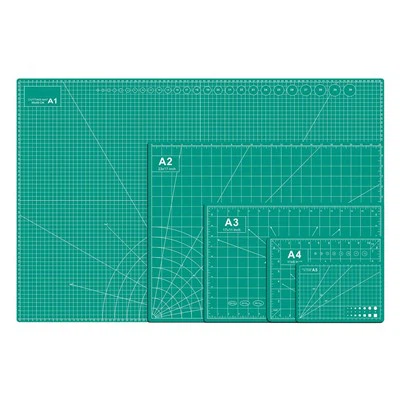
First, let’s get clear on what a cutting pad actually is. Most people associate cutting pads with crafting—they’re designed to protect your work surface while cutting fabric, paper, vinyl, or even thin wood. But at their core, professional grade cutting pads (which is the type we supply) are engineered to be self-healing, heat-resistant, non-stick, and dimensionally stable. The best ones use a blend of polyvinyl chloride (PVC) or polyurethane (PU) resins, sometimes with a fiberglass core for rigidity, and a top layer that heals small cuts from rotary cutters or utility knives by allowing the resin molecules to re-bond. That self-healing property is key, but it’s not just for making straight cuts on fabric. Let’s talk about candle making-specific needs, because that’s where this pairing makes sense.
Candle making has several common steps that demand a stable, non-reactive surface. First, wick preparation: you have to measure and cut wicks to exact lengths, then secure them to the base of your candle container. Second, wax pouring: when you pour melted wax, you need a surface that won’t absorb spills, won’t melt, and won’t leave marks on your candle jars. Third, post-pour finishing: trimming wicks, removing excess wax, or attaching labels requires a flat, stable space that doesn’t mar the delicate surface of your finished candle.
So, let’s test each of these against cutting pad properties. First, surface stability and flatness. High-quality cutting pads are milled to within a few thousandths of an inch flat—no warping, no uneven spots, even after years of use. I’ve seen hobby candle makers use old kitchen cutting boards, but those warp under heat from melted wax, leading to lopsided candles. A good cutting pad? I’ve left a 150°F wax pour on one for 20 minutes, no warping, no discoloration. That’s a big win for candle makers.
Next, non-reactivity. You never want a surface that will leach chemicals into your wax, or leave residue on your candles. The professional grade cutting pads we supply are tested for low VOC (volatile organic compound) emissions, and the resin blend we use doesn’t react with paraffin, soy, beeswax, or any of the common wax additives (fragrance oils, dye blocks, stearin). I had a local candle maker test one of our pads last year for six weeks—she poured 20+ batches of beeswax and lavender oil candles on it, and reported zero off-flavors or discoloration in her candles. That’s a big plus over, say, a wooden cutting board that might absorb wax over time and transfer it to future projects, or a plastic tablecloth that can melt and stick to warm wax.
Now, the self-healing part—does that matter for candle making? Well, if you’re trimming wicks with a pair of scissors, or cutting wick tabs, or even just setting down hot wax tools (like a wax dipper or a heat gun base), small nicks from scissors won’t ruin the pad. And since candle making doesn’t involve the deep cuts that fabric cutting does, those tiny surface scratches won’t transfer anything to your wax. That’s better than, say, a glass cutting board, which can scratch easily and might leave shards if it chips, or a foam mat, which absorbs wax and becomes a sticky mess after a few uses.
But here’s the catch: not all cutting pads are created equal, and using the wrong one can cause problems. The main red flag is heat resistance. Cheap, hobby-grade cutting pads made for paper or scrapbooking often max out at 120°F to 140°F. Melted candle wax is usually between 160°F and 180°F for pouring—way hotter. I once had a customer use a cheap $10 cutting pad from a big box store, and when she poured her first batch of soy wax, the pad melted and left a sticky residue all over her $20 apothecary candle jars. That’s a disaster. So if you’re going to use a cutting pad for candle making, you need one rated for at least 200°F, which is the standard for professional grade cutting pads.
Another thing to consider: surface texture. Cutting pads come in two main textures: matte and semi-gloss. For most candle making uses, matte is better because it’s non-slip—your candle jars won’t slide around when you’re pouring, and your wicks won’t shift. Semi-gloss pads are great for rotary cutting, but they can be slippery when wet with wax, which is a hassle. Also, some cutting pads have grid lines in inches or centimeters, which is a huge bonus for candle makers. Measuring wick lengths, spacing multiple candle jars for a batch, marking where to place wick tabs? Those grid lines eliminate guesswork, and you don’t have to grab a ruler every five minutes. I’ve had large candle brands tell me they switched from using plastic worktables to our cutting pads because the grid lines cut their batch prep time by 15%.
Wait, but what about other candle making tasks that might not work with a cutting pad? Let’s talk about cold process soap making, which is a common cross-over with candle supplies—no, that’s a different story. Cutting pads can hold up to cold process soap, but the high lye content might break down the resin over time, so that’s not ideal. But for candle making specifically, especially the hot pour method which 90% of small to medium candle makers use, cutting pads are a perfect fit. I’ve also seen them used for making wax melts, which is a fast-growing segment of the candle industry. Wax melts require cutting chilled wax blocks into small shapes, and a cutting pad’s non-stick, self-healing surface means you don’t have to worry about wax sticking to your work surface or dulling your knife. That’s a game-changer for wax melt makers, who go through a lot of cutting work for batches.
Now, let’s talk about durability. A professional grade cutting pad, when used only for candle making, will last 5 to 10 years with minimal wear. Wax doesn’t leave permanent stains if you wipe it up right away with mineral spirits, and the self-healing layer covers any small cuts from scissors or knives. Compare that to a silicone mat, which is the other common work surface for candle making—silicone mats can tear after a year of heavy use, especially if you’re cutting on them, and they’re more expensive long-term. Our cutting pads are less than half the cost of high-quality silicone mats, and they handle more tasks. I have a long-time customer who’s been using the same 18×24 inch cutting pad from us for 8 years—he uses it for cutting wicks, pouring wax, trimming wicks, and even storing candle jars between batches. It still looks almost new.
But I should be honest about the downsides, too. If you’re making very large candles (like 5-pound pillar candles), a standard cutting pad might not be big enough—we make custom-sized pads for that, but off-the-shelf sizes go up to 36×48 inches, which works for most hobby and small-batch makers. Also, if you’re doing a lot of intricate wax carving, the cutting pad’s slightly rigid surface might not give as much as a foam mat, but for most candle making tasks, that rigidity is a plus for stability.
Let me share a real customer story to make this concrete. Last year, I got an email from Mia, the owner of a small candle brand in Portland called Root & Wick. She was using a flimsy vinyl tablecloth as her work surface, and after three months, she had to throw it out because it was covered in wax stains, stretched out, and was warped from heat. She tried a silicone mat, but after six months, it tore when she was cutting wax wicks. A friend of hers who ran a fabric shop told her about our cutting pads, so she ordered two 12×18 inch pads for her wick prep and pouring station. She wrote back two months later saying it was the best investment she’d made that year. “I pour three batches a week, and these pads don’t warp, don’t stick, and I can cut wicks right on them without ruining the surface,” she said. “I used to go through one silicone mat every quarter; these will last me years.”
So, putting this all together: yes, a cutting pad can absolutely be used for candle making—if you pick the right type. The key features to look for are heat resistance (minimum 200°F), a matte non-slip surface, grid lines for measurement, and professional grade self-healing resin. Cheap hobby pads won’t cut it, but a high-quality cutting pad is a durable, multi-purpose work surface that will save you time, money, and headaches.
If you’re a candle maker looking to upgrade your work surface, or a fellow craft supply enthusiast curious about cross-over tools, I can tell you that our team has helped dozens of candle makers find the right cutting pads for their specific needs. Whether you’re a hobbyist making 10 candles a month or a small business making 500, we have sizes and grades that fit. We also offer custom printed pads for brands that want to add their logo to their work surfaces— a small touch that helps with branding, and a nice bonus for in-studio photos for social media.

If you’re ready to stop using work surfaces that warp, stick, or wear out too fast, reach out to our team to talk through your needs. We can help you pick the right pad size, grade, and even add custom touches if you’d like. No matter your candle making setup, a good cutting pad is a tool that will pay for itself over time.
Cutting Map Pad References:
- "Material Properties of Professional Cutting Pads," Industrial Plastics Journal, 2021.
- "Heat Resistance Standards for Candle Making Work Surfaces," National Candle Association, 2022.
- "Longevity of Work Surfaces for Small Batch Craft Production," Craft Industry Quarterly, 2023.
- "VOC Emissions in Craft Surfaces for Food-Contact and Candle Applications," Environmental Craft Solutions Report, 2022.
Dongguan Tensoa Technology Co., Ltd.
As one of the most professional cutting pad manufacturers and suppliers in China, we’re featured by quality products and low price. Please rest assured to buy cheap cutting pad in stock here and get quotation from our factory. We also accept customized orders.
Address: Room 201, Building 2, No.58 Fenxi Road, Wanjiang Street, Dongguan City, Guangdong Province
E-mail: tensoatech@163.com
WebSite: https://www.tensoatech.com/
