If you’ve ever worked in industries that demand pinpoint accuracy under extreme conditions—think aerospace component testing, medical device validation, or high-stakes automotive crash simulations—you’ve probably heard someone mutter, “We just need the right cable for the test.” What they’re referring to, more often than not, is a specialty test lead cable: a far cry from the generic Ethernet or power cords you plug into your home office desk, and a critical, often unsung, link between high-stakes testing equipment and the parts that keep our world running. As a specialty cables supplier who’s spent 12 years designing and manufacturing these cables for clients across the globe, I’ve learned that specialty test leads aren’t just “thicker wires” or “shorter cords.” They’re engineered solutions tailored to the chaos of real-world testing, and getting them wrong can derail a multi-million-dollar product launch or, worse, compromise safety. Let’s break down what makes them unique, why they matter, and how to tell if you’re using the right one for your next test. Specialty Cables
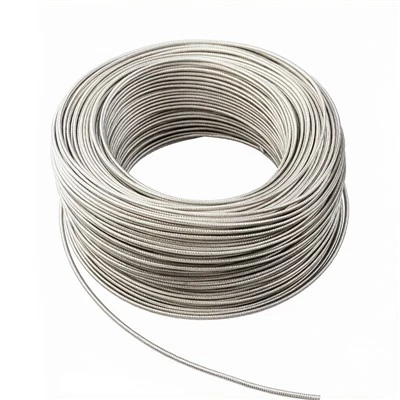
First, let’s start with the basics, but skip the stuff you already know about regular electrical cables. A standard power cable or even a general-purpose test lead is built for basic continuity, right? It’s designed to carry voltage from Point A to Point B without fraying in a controlled, low-stakes environment. Specialty test lead cables? They’re built for variables that would make a generic cable fail in minutes, if not seconds. That means every part of the cable—from the conductor inside to the outer jacket—has a job specific to the test conditions it will face. Let’s dive into those core components, because that’s where the science gets interesting.
The conductor is the “heart” of any cable, and specialty test leads use conductors that are far more precise than what you’ll find in off-the-shelf parts. For example, in aerospace testing, where you might be measuring tiny voltage fluctuations in a fuel system component during a temperature cycle from -65°F to 350°F, a standard copper conductor can have inconsistent resistance that skews your data. We use stranded copper conductors with tightly controlled twist counts, often tinned to resist corrosion and oxidation, and sometimes even plated with gold or silver for applications that need minimal signal loss over very short distances. Wait, silver is actually better for conductivity, but it’s more prone to tarnish—so for a test that only lasts a few hours, silver-plated conductors might be ideal, but for a test that runs for weeks, gold is the way to go. It’s these tiny, context-specific choices that define a specialty test lead, not just a one-size-fits-all conductor.
Next comes the insulation, and this is where most people underestimate how critical it is. A generic cable’s insulation might work fine for room-temperature lab work, but a specialty test lead could be exposed to jet fuel, hydraulic fluid, extreme cold, high pressure, or even electromagnetic interference (EMI) from other testing equipment. For example, in automotive crash testing, cables are often draped over metal frames, dragged across concrete, and exposed to high humidity and road spray—their insulation can’t crack, flake, or break down mid-test. We use specialty polymers like PTFE (Teflon), FEP, or cross-linked polyethylene (XLPE) for insulation, each with its own superpower. PTFE can handle extreme temperatures from -450°F to 500°F, making it perfect for high-temperature component testing, while XLPE is more abrasion-resistant for field tests where cables get pulled and tugged. Some of our test leads even have dual insulation: a thin inner layer for electrical protection and a tough outer jacket for mechanical durability, like a cable wearing a heavy-duty raincoat.
Then there’s the shielding, which is a non-negotiable for any test that requires accurate data. If you’re testing a medical pacemaker component, even a tiny amount of EMI from a nearby welding machine or power supply can throw off your readings, leading a manufacturer to think the part is faulty when it’s just a bad cable connection. Specialty test leads use a range of shielding options, from braided copper for general EMI protection to foil shielding for high-frequency signals, and even twisted pairs for low-voltage, high-sensitivity applications. I remember a client a few years back who was testing a new sensor for wind turbine blade health—their generic test lead had so much EMI interference that their data showed false stress points every time they ran the blades at high speed. We swapped in a braided-shield specialty test lead, and suddenly their noise dropped by 98%—they ended up using that exact cable for all their field tests. That’s the difference a specialty test lead makes: it doesn’t just carry a signal, it protects it.
Now, let’s talk about the role of specialty test lead cables in real-world industries, because this isn’t just theoretical science. If you work in aerospace, test leads are used to validate parts before they go into planes or rockets. A rocket engine component test might require 20+ test leads running at once, measuring temperature, pressure, and voltage, all while exposed to extreme vibration and high heat. Use the wrong cable there, and not only do you get bad data, but you could risk damaging the expensive test equipment or even the prototype part itself. In medical devices, test leads are critical for validating things like insulin pumps or MRI-compatible tools—they have to be biocompatible, too, because they might come into contact with skin or bodily fluids. We’ve even made specialty test leads for clinical trial testing that are latex-free and resistant to disinfectants, so they can be reused across multiple patient tests without breaking down.
Automotive is another huge market for these cables. As the industry shifts to electric vehicles (EVs), test leads for EV battery packs have to handle far higher voltages and currents than gas-powered vehicles—we’re talking 800 volts and thousands of amps—so their insulation has to be rated for that, and they have to be designed to prevent arcing, which is a serious safety hazard. I’ve seen automotive test labs use generic cables for EV battery testing and end up with small arcs that burned through the insulation, ruining a $50,000 prototype battery pack. That’s the cost of cutting corners on a specialty test lead.
But specialty test lead cables aren’t just for high-tech, high-budget industries. We also make smaller, simpler test leads for universities and research labs, where graduate students might be testing small electronic components on a tight budget. Those might use standard stranded copper with FEP insulation, but we still tailor them to the application—like making a shorter lead with a tighter twist for a breadboard circuit, or a longer, more flexible lead for testing components in a climate chamber. The point is, specialty doesn’t mean overcomplicated or overpriced—it means tailored to the specific test’s needs, no matter how big or small the project.
One thing I always tell new clients is that the “specialty” in specialty test lead cable isn’t just in the materials; it’s in the customization. Every test is unique, so every test lead should be too. A lot of suppliers will offer pre-made test leads in standard lengths, but at our company, we work with clients to build cables that fit their exact needs: custom lengths, specific connectors (from standard banana plugs to military-grade locking connectors), even custom color coding to help technicians distinguish between different signal lines in a crowded test setup. Last year, a small aerospace startup came to us with a prototype for a new satellite component—they needed a test lead that was 18 inches long, had gold-plated SMA connectors, and could handle radiation exposure in low Earth orbit. We worked with their engineers for two weeks, tested three different insulation materials, and delivered 50 custom leads that worked perfectly for their final pre-launch testing. That’s the kind of problem-solving that comes with being a specialty cables supplier, not just a parts retailer.
Now, let’s talk about the common mistakes people make when choosing test leads, because that’s something I see every week. First, they use generic cables designed for permanent installation instead of test leads designed for repeated use. A standard THHN cable is great for wiring a building, but it’s not built to be plugged and unplugged 100 times a day, or dragged across a lab floor, or bent repeatedly around test fixtures. Test leads are meant to be flexible—they have a high bend radius, so they don’t crack or break after a few weeks of use. Generic cables have a low bend radius, so the insulation cracks, the conductor breaks, and your data gets messed up.
Another mistake is ignoring the environmental conditions. A lot of test labs are temperature-controlled, but if you’re doing field testing or testing in a climate chamber, you can’t use a room-temperature-rated cable. I once had a client test agricultural sensors in the Arizona desert in July—they used a standard PVC test lead, and by the second day, the heat had made the insulation soft and sticky, and the cable was pulling away from the connector, leading to intermittent signal loss. We swapped in a UV-resistant, high-temperature FEP lead, and they were able to finish their 2-week field test without any issues.
The final mistake is not considering EMI, especially for low-voltage signals. If you’re testing a small sensor that outputs 10 millivolts, a generic cable will pick up so much EMI from nearby equipment that your readings will be useless. Investing in a shielded specialty test lead here isn’t a luxury—it’s a requirement for accurate data. I always tell clients to ask: what’s the signal level, what’s the environment, how often will this cable be used, and what are the safety requirements? Those four questions will lead you to the right test lead every time.
As a specialty cables supplier, my job isn’t just to sell you a cable—it’s to help you pick the right one for your test, because I’ve seen firsthand how the wrong cable can derail work that takes months or even years to complete. Whether you’re a large aerospace firm testing rocket engines, a medical device maker validating a new pacemaker, or a university lab working on a student research project, the specialty test lead cable you choose is a small but critical part of getting the job done right.

If you’re currently dealing with bad test data, cables that fail mid-test, or you’re just not sure if your current test leads are the right fit, I’d be happy to help. We work with teams across every industry that relies on accurate testing, and we can design and manufacture custom specialty test lead cables to meet your exact specifications. There’s no one-size-fits-all solution for testing, but there is a specialty test lead that’s perfect for your needs—all you have to do is reach out.
Flat Cables References
- UL 62, Standard for Electrical Flexible Cord and Cable
- Aerospace Industries Association (AIA) Specification AS4143, Electrical Cables, Aerospace
- ASTM D4595, Standard Test Method for Tensile Properties of Paper and Paperboard Using Constant-Rate-of-Elongation Apparatus
- Medical Device Testing Association (MDTA) Guide to Cable Selection for In Vitro Diagnostics
- SAE J1128, Standard for Low-Voltage Electrical Cables, Vehicles
Anhui Yuantong Cable Co., Ltd.
As one of the most professional specialty cables manufacturers and suppliers in China, we offer a wide range of cables with superior quality. Please feel free to wholesale bulk customized specialty cables from our factory. Also, pricelist is available.
Address: Yongfeng Industrial Park, Tianchang City, Anhui Province
E-mail: ahytcable@126.com
WebSite: https://www.yuantongcable.net/
