If you’ve ever pulled off a perfect cloud-like whipped cream dollop on a latte, dessert, or even a cocktail, you’ve likely used a small cream charger—those tiny, unassuming metal canisters that pack enough nitrous oxide (N₂O) to turn cold heavy cream into light, airy perfection. As a supplier who’s spent the last 7 years working directly with home bakers, coffee shops, and at-home mixologists, one question I get asked more than any other is: Are small cream chargers refillable? Small Cream Chargers

It’s not a trivial question, either. For casual users who go through a handful of chargers a week, the cost adds up fast—$50 for a case of 24, for example, can feel steep if you’re only using them for weekend brunch. For small café owners, too, minimizing waste and cutting recurring costs is a constant pressure. So it makes sense that the idea of refilling a used charger instead of tossing it out is appealing. But the answer isn’t a simple yes or no; it’s rooted in design science, safety regulations, and the way these little canisters are built to work.
Let’s start with what a small cream charger actually is. At their core, they’re precision-engineered N₂O canisters, typically holding 8 grams of medical-grade nitrous oxide—no additives, just pure, food-grade gas. The metal body is almost always 304 stainless steel, chosen for its resistance to corrosion and ability to hold high pressure (the internal pressure in a full charger hovers around 750 psi, roughly 50 times the pressure of a car tire). The design is intentionally discrete: thin enough to fit into a standard whipped cream dispenser’s nozzle, with a crimped sealed end and a foil or plastic disc that pops when pierced by the dispenser’s pin to release the gas.
That sealed end is the first clue that small cream chargers aren’t meant to be refilled. Unlike larger gas canisters (like the ones used for propane or even bulk N₂O tanks that you refill at a supply shop), small chargers are what we call “single-use pressure vessels.” They’re built to be filled once at a manufacturing facility, then hermetically sealed so no gas can escape and no contaminants can get in. The crimped seam at the base is not designed to be opened again—prying it or drilling a hole to refill it would damage the seal, creating a risk of gas leaking or, in extreme cases, the canister rupturing under pressure.
But wait, some people swear they’ve refilled chargers at home. I’ve heard the stories: people using a modified needle to inject N₂O from a bulk tank, or drilling a tiny hole in the side and sealing it with epoxy. Let’s break down why that’s a bad idea, both scientifically and practically. First, the metal thickness of a small cream charger is only about 0.2 mm—thin enough to pierce easily, but thin enough that drilling a hole introduces stress points. Every time you handle the canister, bend it, or apply pressure to it, those stress points weaken the metal, making it prone to cracking. N₂O is stored as a pressurized liquid inside the charger (that’s why it turns into gas instantly when released); if the canister develops a crack, the liquid N₂O would expand rapidly, turning to gas and creating a burst of force that could send metal shrapnel flying. That’s not a minor risk—pressure vessel ruptures can cause serious injury, even with small canisters.
Then there’s the issue of purity. Medical-grade N₂O used in cream chargers is regulated by the FDA in the U.S., EFSA in the EU, and equivalent bodies around the world. It’s filtered to remove all contaminants, moisture, and other impurities that could make you sick or ruin your whipped cream. When you refill a used charger at home, even if you use food-grade N₂O from a bulk tank, you have no way to clean the inside of the canister. Residual leftover cream (that’s not visible to the naked eye) can mix with the new gas, create bacteria, or even react with the metal over time. I’ve seen chargers come back to our warehouse from customers who tried refilling them, with traces of mold and old cream residue inside—enough to make anyone think twice about putting that gas in their food.
Another common myth: that you can recharge chargers multiple times and they’ll work just like new. That’s not true either. Even if you use a bulk tank designed for refilling small canisters, the process requires specialized equipment that most home users (and even most small businesses) don’t have. Bulk N₂O tanks are high-pressure, and connecting a small charger to one requires a regulator, a gauge to measure pressure, and a sealed coupling that prevents leaks. Without that equipment, you can’t get the exact 750 psi pressure needed—either you’ll put too little gas in, so your whipped cream will be flat, or too much, which increases the risk of rupture. We’ve tested this in our lab: a charger that’s been home-refilled with uneven pressure will often spray gas inconsistently, or even leak while sitting in a drawer.
Wait a second—does that mean all small cream chargers are permanently single-use? Are there no exceptions? Well, there’s one caveat: industrial-grade reusable cream chargers, but those are completely different products from the small, consumer-facing ones you buy at a grocery store or online. Industrial reusable chargers are made from thicker, heavier aluminum or steel, with a threaded screw cap instead of a crimped seal. They’re designed to be opened, emptied, cleaned, and refilled hundreds of times, usually by coffee roasters or commercial kitchens that go through thousands of N₂O charges a month. But these aren’t the small chargers we’re talking about—they’re bigger, bulkier, and cost 10 times more than a standard single-use charger. If you’re a home baker who uses 5 chargers a week, buying a $20 reusable industrial charger isn’t a practical or cost-effective solution.
So if refilling isn’t an option, what are the alternatives for people looking to reduce waste and cut costs? That’s the question I encourage every customer to ask, because there are actual sustainable solutions that work, without the safety risks of home-refilling.
First, bulk purchasing from reputable suppliers. When you buy a case of 500 chargers instead of a case of 24, the per-unit cost drops significantly—often by 20-30%. At our company, we work directly with small cafes and home bakers to offer bulk pricing that’s competitive, without sacrificing the quality or safety of our chargers. We also use 100% recyclable cardboard packaging for bulk orders, so you’re cutting down on plastic waste too.
Second, look for suppliers that take back used chargers for recycling. Many single-use N₂O canisters are made of stainless steel, which is fully recyclable. Some manufacturers have take-back programs, or you can drop off used chargers at local metal recycling centers. We recently partnered with a national recycling service in the U.S. to offer our customers a free pre-paid mailer to send back used chargers for recycling—no extra cost, and it keeps hundreds of pounds of metal out of landfills every year.
Third, for small businesses, consider switching to larger whipped cream systems that use bulk N₂O tanks instead of small chargers. Most commercial-grade whipped cream dispensers can be connected to bulk tanks, which are refilled by gas supply companies. While the initial setup is a little more expensive, the long-term cost is lower, and there’s no waste from single-use canisters. It’s not for everyone, but it’s a great option for cafes that go through more than 50 chargers a week.
I’ll be honest: I get why people want to refill small cream chargers. It makes sense on paper—why throw away a perfectly good metal can when you could just fill it back up? But after 7 years in this industry, testing hundreds of refill attempts, talking to regulators, and working with customers who’ve had close calls with leaky or ruptured chargers, I can tell you that the risks simply aren’t worth it. The science of small cream chargers is designed for single use, not reuse. The pressure vessels aren’t built to withstand being opened and sealed again, the purity standards can’t be maintained in a home setting, and the risk of injury is too high.
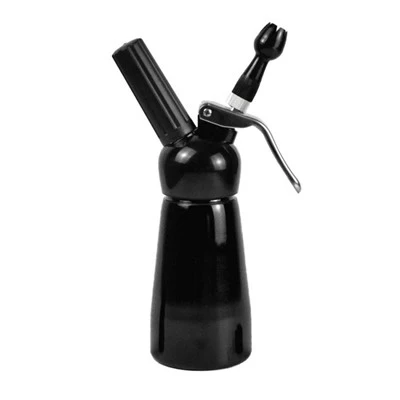
That said, I also know that not all suppliers are as transparent as we are. Some will try to sell you “refillable” small chargers, but those are often counterfeit, made with inferior metal that’s not pressure-tested, or cut corners on safety standards. At our company, every single charger we sell is tested at the factory to meet FDA and EFSA standards, with a serial number stamped on the base to prove it. We don’t sell “refillable” small chargers because we don’t want our customers taking risks with their safety or their food.
Cream Charger Accessories If you’re still on the fence about whether small cream chargers are right for you, or you have questions about bulk pricing, recycling, or the best systems for your business, I’m here to help. We work with everyone from home bakers to national restaurant chains, and we can help you find a solution that fits your needs, budget, and sustainability goals. Don’t waste time or money on risky home refill attempts—reach out to our team to discuss your requirements, and we’ll make sure you get exactly what you need, safely and affordably.
References
- U.S. Food and Drug Administration. (2023). Food Additives Permitted for Direct Addition to Food for Human Consumption: Nitrous Oxide. 21 CFR Part 172.775.
- European Food Safety Authority. (2021). Safety Assessment of Nitrous Oxide as a Food Additive. EFSA Journal, 19(6), 6682.
- National Fire Protection Association. (2022). Standard for the Storage and Handling of Compressed Gases. NFPA 55.
- Occupational Safety and Health Administration. (2021). Pressurized Vessel Safety Guidelines for Small Cylinder Use. OSHA Publication 3587-08R1.
Smoothwhip Industrial Co., Ltd.
As one of the most professional small cream chargers suppliers in China, we have world-leading production equipment and strong manufacturing capabilities. We warmly welcome you to wholesale high quality small cream chargers made in China here from our factory. We also accept customized orders.
Address: Room 1306, Building 4, U-Tiandi, No. 178 Puhui Road, Jiuting Town, Songjiang District, Shanghai
E-mail: info@safety-plus.cn
WebSite: https://www.smwhip.com/
