Hey everyone, let’s cut to the chase—if you’re running a machining shop or just got your hands on a new flat end mill, you’ve probably stared at that “feed rate” number in your G-code sheet and thought, “What even is this, and why does it matter more than I thought?” As someone who’s been supplying flat end mills for over a decade, I can tell you this: skip the fancy textbook jargon for a second, because feed rate is the make-or-break metric that turns a perfect part into a scrap heap (or a smooth, shiny part that makes your client leave a 5-star review). Flat End Mill
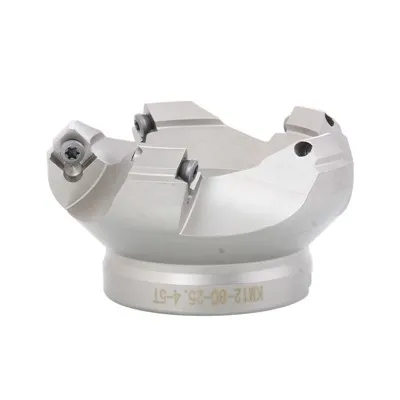
First, let’s keep it real—feed rate, plain and simple, is how fast the flat end mill moves along the workpiece as it cuts. But wait, it’s not just “how fast the tool goes”; there are tiny, critical factors that go into that number, and if you mess ’em up, you’re either wasting tools, burning through materials, or dealing with chatter that sounds like your garage saw a cat in a vacuum. Let’s break this down without the engineer overload.
Think of it like driving a car: if your feed rate is the speed you’re going, the tool diameter is your car’s size, the number of flutes is how many tires you have, and the material you’re cutting is the road surface. Going too fast on a dirt road = skidding, getting stuck, or blowing out a tire (that’s your tool breaking mid-cut). Going too slow on a highway = wasting time, wearing out your brakes (tool wear from rubbing instead of cutting). That’s exactly what happens with feed rate.
Now, let’s get into the numbers that actually matter, because I know you’re here for the actionable stuff. The standard formula you’ll see (and I’ve had customers yell at me for not mentioning this right away) is Feed Rate = RPM × Number of Flutes × Chip Load per Flute. If you want the short version, that’s FR = RPM × Z × CL, where Z is flutes and CL is chip load. I use this every single day with my team when we help customers pick the right mills for their jobs.
Let’s make this formula make sense with an example. Say you’re cutting 6061 aluminum (super common, great for prototypes) with a 10mm 2-flute flat end mill. RPM for that setup? Let’s say 3,000 (aluminum loves higher RPM, I swear by that). Now, chip load per flute here is roughly 0.15mm—wait, why that number? Because aluminum is soft, so you can take bigger chips. If this was hard tool steel (like D2), chip load would drop to 0.05mm, because that stuff chews up tools fast if you push too hard. So plugging in: FR = 3,000 × 2 × 0.15 = 900 mm/min. That’s the speed you’d set your machine to. Simple, right?
Now, here’s where a lot of new machinists (or even some old heads) mess up: they ignore the material being cut. I can’t tell you how many times a customer will message me saying, “Hey, I used your 10mm 2-flute mill on steel and set the same feed rate as I did on aluminum—now the tool’s snapped.” C’mon, steel is 3x harder than 6061, so chip load drops a ton. Also, the type of cut matters: slotting (when the tool is fully buried in the material) vs. side milling (when only part of the tool is engaged). Slotting needs lower feed rates because more flutes are cutting at once, generating more heat and force. Side milling? You can crank that feed rate up a little, since less of the tool is in the material.
Tool specs also play a huge role, and this is why my flat end mills are designed to give the best possible feed rates for every application. Number of flutes: 2-flute mills are for softer materials, right? Wait, no—wait, 2-flutes have more room for chips to escape, so you can run faster on materials that produce long chips (like brass or soft aluminum). 4-flute mills? Better for hard materials and finishing cuts, because more flutes mean smoother cuts, but you have to lower feed rate a tiny bit because each flute is taking a smaller chip. I always tell customers: if you’re doing roughing (taking big cuts to remove material fast), go for fewer flutes. Finishing? More flutes for cleaner surfaces, adjust feed rate down just a touch to avoid chatter.
Tool coating is another big one that most people overlook. The flat end mills I supply come with different coatings—TiN for general aluminum, TiCN for steel, AlTiN for high-heat applications. A coated tool can handle 10-20% higher feed rates than an uncoated one, because the coating reduces friction and heat. I had a customer switch from uncoated mills to my AlTiN coated ones last quarter, and he told me he bumped his feed rate up by 15% and saw tool life go up by 25% total. That’s not just a win—it’s money in your pocket, plain and simple.
Wait, let’s talk about common mistakes I see all the time, because I want you to avoid them like the plague. First, guessing the RPM instead of calculating feed rate. I get it—when you’re in a pinch, you just want to set a number and go, but guessing leads to broken tools, scrapped parts, and wasted time. Second, not accounting for tool overhang. If your flat end mill is sticking way out of the collet (like 3x the diameter), you have to lower feed rate by 20-30% because the tool will flex, causing chatter and inaccurate cuts. I always remind customers to keep overhang as short as possible—if you can’t, adjust that feed rate. Third, forgetting about coolant. If you’re not using flood coolant or mist coolant while cutting, you have to drop feed rate a bit, because heat builds up and makes the tool dull fast. I recommend coolant for every single application, but especially for high-feed cuts.
Now, let’s get to the fun part: how to actually set feed rate for different materials, since that’s what most of you are scrolling for. Let’s break down the most common materials I get questions about:
- 6061 Aluminum: Super forgiving, goes great with 2 or 3-flute flat end mills. RPM = 2,500-4,000, chip load per flute = 0.12-0.2mm. Feed rate will be 600-1,800 mm/min. That’s a wide range, so if you’re doing finishing, go lower end; roughing, higher.
- Mild Steel (1018): Harder than aluminum, so RPM = 1,500-2,500, chip load = 0.05-0.1mm. Feed rate = 150-500 mm/min. 4-flute mills work best here for balance of speed and finish.
- Tool Steel (D2, A2): Super tough, RPM = 800-1,500, chip load = 0.03-0.07mm. Feed rate = 100-200 mm/min. You need a tough, coated mill here—all my flat end mills for hard materials are coated to handle the heat.
- Brass: Great for high feed rates, since it’s soft and produces small chips. RPM = 3,000-5,000, chip load = 0.15-0.25mm. Feed rate can hit 1,000-2,500 mm/min.
- Plastically (for prototypes): Low RPM, high chip load. RPM = 1,000-2,000, chip load = 0.1-0.18mm. Feed rate = 200-720 mm/min. Just make sure to clear chips, because plastic can gum up flutes.
Wait, but what about chatter? Chatter is that annoying vibration that makes the part look like it has a bad finish, and it’s often caused by too high a feed rate or wrong RPM. If you see chatter, first check if your feed rate is too high—drop it by 10%, adjust RPM a little, and make sure your tool is tight in the collet. I’ve had customers call me panicking about chatter, and 9 times out of 10, it was just a feed rate tweak.
Now, let’s tie this back to why my flat end mills are the right choice for getting your feed rates spot on. I’ve been supplying these tools for years, working directly with machinists, hobbyists, and small shops to tune every mill for consistent performance. A lot of cheap flat end mills out there have inconsistent flute geometry or thin coating, which means you can’t hit the feed rates the tool is rated for. My mills are precision-ground, so every flute is the same size, every coating is applied evenly, so you can trust the chip load numbers we print on the packaging. No guesswork, no broken tools, no wasted money.
At the end of the day, feed rate isn’t just a number in a G-code. It’s the difference between finishing a job on time and going over budget, between a part that works perfectly and one that gets rejected, between a tool that lasts a week and one that lasts months. I’ve seen it all—from a hobbyist who used the wrong feed rate and snapped 3 mills in one weekend, to a big shop that upped their feed rate by 10% and saved $15k a year in tooling costs. That’s why I’m here, to help you get that right.
If you’re tired of guessing feed rates, dealing with broken tools, or just want a flat end mill that performs as advertised, reach out to our team. We can help you pick the right mill for your material, give you exact feed rate numbers tailored to your machine, and answer any questions you have. No automated responses, no sales pitches—just real advice from people who’ve been in the machining trenches for years. Don’t let bad feed rates ruin your next job—let’s get you set up for success.
Face Mill Cutter Heads References:
- Machining Data Handbook, 3rd Edition, Modern Machine Shop, 2019.
- Tool and Manufacturing Engineers Handbook, Volume I: Machining, Society of Manufacturing Engineers, 2021.
- Flat End Mill Performance Guidelines, Kennametal Inc., 2022.
Small Craftsman (Shandong) Machine & Tools Co., Ltd.
Small Craftsman (Shandong) Machine & Tools Co., Ltd. is one of the most experienced flat end mill manufacturers and suppliers in China, also supports customized service with low price. Please feel free to buy bulk high quality flat end mill in stock here from our factory. Contact us for pricelist.
Address: No.9 Quanxin Rd., Sishui Economic Developing Zone, Jining, Shandong, China.
E-mail: 6196@ocutchina.com
WebSite: https://www.ocutooling.com/
