Hey there, audio enthusiasts and tech-savvy folks! As a supplier of Miniature Brushless Motors, I often get asked if these tiny powerhouses can be used in audio equipment. Well, let’s dive right in and explore this interesting topic. Miniature Brushless Motor

What Are Miniature Brushless Motors Anyway?
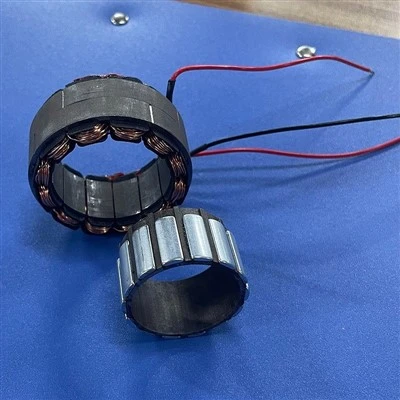
Before we talk about their use in audio gear, let’s quickly run through what miniature brushless motors are. Unlike traditional brushed motors, which have brushes that make physical contact with the commutator to transfer electrical power, brushless motors use an electronic controller to switch the current in the motor windings. This design has several advantages. It’s more efficient, lasts longer because there’s no brush wear, and runs quieter, which is crucial in a lot of applications. And when we say "miniature," we’re talking about motors that are really small, often just a few millimeters in diameter. They’re super lightweight but can still pack a decent punch in terms of power.
The Basics of Audio Equipment
Audio equipment comes in all shapes and sizes, from your everyday headphones and portable speakers to high – end studio mixing consoles and large concert sound systems. The key components of audio equipment usually include a source (like a CD player or a smartphone), an amplifier to boost the audio signal, and a speaker to convert the electrical signal into sound waves. Each part of the audio chain is important for getting that perfect sound.
Potential Uses of Miniature Brushless Motors in Audio Equipment
Speaker Design
One of the most obvious places where miniature brushless motors could be used is in speaker design. In some high – end speakers, there are mechanisms to adjust the position of the speaker cones or other components to improve sound quality. Miniature brushless motors could be used to control these adjustments precisely. For example, they could be used to fine – tune the tilt or angle of a speaker in a multi – speaker setup. This would allow for better sound dispersion and a more immersive listening experience.
Also, in some advanced speaker systems, there are active equalization features. Miniature brushless motors could be used to adjust physical elements within the speaker enclosure, like dampers or baffles. By changing these elements, the frequency response of the speaker can be altered, which is great for customizing the sound to different types of music or listening environments.
Headphone Actuators
In headphones, especially noise – cancelling ones, there’s a need for precise control of various components. Miniature brushless motors could be used as actuators. They could help adjust the fit of the headphones on the user’s head more accurately. This is important because a proper fit not only increases comfort but also improves the noise – cancelling performance. For example, a motor could be used to slightly adjust the tension of the headband or the position of the ear cups to ensure a better seal.
Audio Mixing Consoles
In a professional audio mixing console, there are a lot of moving parts. Faders, knobs, and sliders need to be adjusted precisely. Miniature brushless motors could be used to automate these adjustments. For instance, during a live performance, the audio engineer might want to change the volume of multiple channels simultaneously. Motors could be used to move the faders in a coordinated manner, ensuring smooth and accurate control. This would not only make the mixing process more efficient but also reduce the chances of human error.
Advantages of Using Miniature Brushless Motors in Audio Equipment
Quiet Operation
As I mentioned earlier, brushless motors run quieter than brushed motors. In audio equipment, noise is the enemy. Any unwanted noise can interfere with the pure sound that the equipment is trying to produce. Whether it’s a faint buzzing sound or a clicking noise, it can be really annoying. The quiet operation of miniature brushless motors means that they won’t add any extraneous noise to the audio output, allowing you to enjoy your music, podcasts, or whatever you’re listening to without any distractions.
Efficiency
Miniature brushless motors are more efficient than their brushed counterparts. They convert a higher percentage of electrical energy into mechanical energy. In audio equipment, which often runs on batteries or has strict power consumption requirements, this efficiency is a huge plus. For example, in portable speakers or wireless headphones, a more efficient motor means longer battery life. You can enjoy your audio for a longer time without having to worry about constantly recharging your device.
Longevity
Brush wear is a common problem in brushed motors. Over time, the brushes can wear out, which reduces the performance and lifespan of the motor. Miniature brushless motors don’t have this issue. They can last much longer, which is great for audio equipment. You don’t want to have to replace a motor in your high – end speakers or headphones every few months. With a brushless motor, you can expect your audio gear to keep working well for a long time.
Challenges and Limitations
Cost
One of the main challenges of using miniature brushless motors in audio equipment is the cost. Brushless motors are generally more expensive to produce than brushed motors. This is because they require more complex electronic controllers. For audio equipment manufacturers, especially those producing budget – friendly products, the higher cost of using brushless motors might be a deterrent. They need to balance the benefits of using these motors against the impact on the overall price of the product.
Integration Complexity
Integrating a miniature brushless motor into audio equipment can be quite challenging. The motor needs to be precisely controlled and synchronized with the other components of the equipment. This requires a good understanding of both motor control technology and audio engineering. For smaller audio equipment manufacturers, they might not have the in – house expertise or the resources to develop the necessary control systems.
Real – World Examples
There aren’t a whole lot of audio products on the market that currently use miniature brushless motors, but there are some interesting cases. Some high – end studio monitors have started using motors to adjust the position of the speaker drivers for optimal sound projection. These motors are small and precise, allowing for fine – tuned adjustments. Also, a few high – end headphones have been experimenting with using motors to adjust the fit and improve noise – cancelling performance.
Conclusion
So, can a miniature brushless motor be used in audio equipment? The answer is a definite yes. There are many potential applications in speaker design, headphone actuators, and audio mixing consoles. The advantages of quiet operation, efficiency, and longevity make them a great fit for audio gear. However, there are also challenges like cost and integration complexity that need to be overcome.
Automotive Brushless Motor If you’re an audio equipment manufacturer or someone interested in exploring the use of miniature brushless motors in your projects, I’d love to have a chat. We have a wide range of high – quality miniature brushless motors that could be just what you need. Whether you’re looking for a motor for a new speaker design or a headphone project, we’ve got you covered. Reach out to us to discuss your requirements and let’s see how we can work together to take your audio equipment to the next level.
References
- "Motor Handbook" by Arnold T. Asquith
- "Audio Engineering Handbook" by Glen Ballou
- Various industry whitepapers on motor technology and audio equipment design
Shenzhen HengDrive Technologies Co., Ltd.
Shenzhen HengDrive Technologies Co., Ltd. is one of the most professional miniature brushless motor manufacturers and suppliers in China, specialized in providing high quality customized service. We warmly welcome you to buy the newest miniature brushless motor in stock here from our factory.
Address: Building A & F, FuNing Hi-Tech Park, XinTian Road, FuHai Street, BaoAn District, ShenZhen, GuangDong Province, China.
E-mail: Marketing001@hengdrive.com
WebSite: https://www.hengdrivemotor.com/
