If you’ve ever spent time messing with math problems just to see where they break, you’ve probably stumbled upon power towers—those tall, winding stacks of exponents that look like they’re straight out of a fantasy textbook. I’m the kind of person who geeks out over both math and the industrial power towers I supply for manufacturing sites, chemical plants, and energy operations, so when a regular client (a process engineer who texts me at 10 PM asking for “a quick nerd deep dive”) hit me with this question last week: “Can power tower equations have multiple solutions?” I knew I couldn’t just send a one-sentence answer. This question isn’t just a fun math thought experiment—it ties to how we design and operate the equipment I spend my days supplying. Let’s walk through this, no stuffy textbook jargon, just real talk about the math behind the structures, and what that means for the power towers you need to run your facility. Power Towers

First, let’s get on the same page about what a power tower is, because there’s a big difference between the math concept and the industrial equipment I sell. In math, a power tower is a right-associative exponent stack, so unlike regular exponentiation (which is left-associative—3^3^3 = 3^(3^3), not (3^3)^3), power towers are written like ^a^b^c, meaning a^(b^c), with the exponents stacking upward. The industrial power towers I supply? They’re vertical structures for distillation, absorption, or stripping processes—they’ve got trays or packing inside, they move fluids and vapors to separate chemicals or purify materials, and their design depends heavily on the same convergence rules that govern mathematical power towers. That overlap is why I care so much about this math question; it’s not abstract to my work.
Let’s start with the basic math: when do power towers have a solution, and can they have more than one? The classic example everyone starts with is the infinite power tower—something that’s e^(something) tall, like x^x^x^… forever. You solve that by saying it’s equal to y, so y = x^y, right? That’s the key equation here. Now, if you rearrange that, you get y^(1/y) = x. If you graph y^(1/y) for positive y (which is all we care about for real-world applications, since negative exponents and negative bases lead to messy complex numbers that don’t work for industrial processes), you’ll see a curve that starts at 0 when y approaches 0, rises to a peak at y = e (Euler’s number, about 2.718), where the value is e^(1/e) ≈ 1.4447, and then falls back toward 1 as y gets really large.
That peak is the make-or-break point for solutions. If x is less than that peak value (≈1.4447), then the equation y^(1/y) = x has two different positive solutions for y. If x equals exactly that peak, there’s only one solution (y = e). If x is larger than the peak, there are no positive real solutions at all. Wait, so that means infinite power towers have two solutions when x is below 1.4447? Let’s test with a common example: take x = √2 (about 1.414, which is less than 1.4447). So we have an infinite power tower √2^√2^√2^… Let’s calculate a few terms to see: first term is √2 ≈ 1.414, second term is (√2)^1.414 ≈ 1.632, third term is (√2)^1.632 ≈ 1.76, fourth is ≈1.84, fifth ≈1.89, sixth ≈1.92… and it’s approaching about 2. Wait, but what’s the other solution? If y is like, 0.5, plug it back in: x = y^(1/y) = 0.5^(1/0.5) = 0.5^2 = 0.25, which is way lower than √2. Wait, no, let’s do that right: solve for y when x is √2, so y^(1/y) = √2. Let’s try y = 2: 2^(1/2) = √2, that works. What about another number? y = 0.5: 0.5^(1/0.5) = 0.5^2 = 0.25, no. y = 0.25: 0.25^(4) = 1/256, nope. Wait, maybe I picked a bad example? Let’s take x = 1.3, which is further below the peak. Solve y^(1/y) = 1.3. Let’s try y = 10: 10^(0.1) ≈ 1.258, close. y = 11: 11^(1/11) ≈ 1.27, y =15: 15^(1/15)≈1.22, y=5: 5^(1/5)≈1.3797, y=6:6^(1/6)≈1.348, y=7:7^(1/7)≈1.36, wait no, wait when I graph y^(1/y), the curve peaks at e≈2.718, so for y < e, the function is increasing, and for y > e, it’s decreasing. Oh! Right! So for any x less than the peak, there’s one solution below y = e, and one above y = e. That’s the two solutions. So for x=1.3, we have y≈1.15 (below e) and y≈7.6 (above e). That makes sense now—my mistake earlier was only testing y above e for x=√2, which is why I only found one solution. The other is a tiny number less than 1.
But hold on—does that mean every finite power tower has multiple solutions? Wait, finite power towers are different. Let’s take a simple finite one: 2^3^2. That’s 2^(3^2) = 2^9 = 512, right? Is there any other way to parse that? No, because exponentiation is right-associative, so finite power towers have only one solution if all the bases are positive real numbers greater than 0, right? Wait, but what if we have a finite power tower with different bases? Like, take a small power tower: 1.5^2^1.2. Let’s calculate that: 2^1.2 ≈ 2^6/5, wait no, 2^1.2 is e^(1.2 ln 2) ≈ e^(0.8318) ≈ 2.297, so 1.5^2.297 ≈ e^(2.297 ln 1.5) ≈ e^(2.297 * 0.4055) ≈ e^(0.931) ≈ 2.537. Is there another value this could be? If we parsed it left-associatively, it would be (1.5^2)^1.2 = 2.25^1.2 ≈ e^(1.2 ln 2.25) ≈ e^(1.2 * 0.8109) ≈ e^(0.973) ≈ 2.646. Oh! So we get two different values just by changing how we associate the exponents. But that’s a trick of notation, not a mathematical solution of the power tower itself. The power tower as a concept is right-associative, so that left-associative parse isn’t a valid solution for the structure.
But wait—there’s a case where even finite power towers can have multiple real solutions if we allow complex numbers? No, for most industrial applications, we only care about positive real numbers, because negative numbers raised to non-integer exponents give imaginary numbers, which don’t work for physical processes. So why does the infinite power tower case have multiple solutions, but finite power towers only one? Because infinite power towers are a limit—they go on forever, so the sequence converges, and depending on the starting point, it can converge to either of two values, as long as x is below that peak of 1.4447. That’s the key difference: finite stacks are fixed, infinite stacks are limits that can have two convergence points.
Now, let’s tie this back to what I do for a living, because this math isn’t just a party trick for number nerds (though I do love pulling it out at trade shows). The power towers I supply are industrial distillation towers—used in refineries to separate crude oil into gasoline, diesel, and jet fuel, in chemical plants to make polymers or pharmaceuticals, and in natural gas processing to remove impurities like water or CO2. When we design these towers, we use fluid dynamics models that are built on convergence rules similar to the infinite power tower math. Wait, let me explain that simply: a distillation tower works by having vapor rising up through trays or packing, and liquid flowing down. At each tray, vapor condenses, liquid vaporizes, and the composition changes as it moves up and down the tower. The “operating line” and “equilibrium line” that model this process intersect at a point that’s like the solution to our power tower equation—just like how our infinite power tower has a solution that depends on the stack of exponents, the distillation tower’s performance depends on how these lines interact.
Last year, I worked with a refinery client who was having a problem with their new 120-foot distillation tower. They kept getting off-spec product, and their engineers were scratching their heads, thinking it was a packing problem or a tray design flaw. I asked them to send over their process data, and noticed that their operating parameters were right at that “peak” point of our power tower math—meaning their system was operating at a point where small changes in feed rate or temperature could push them to either of two different steady states. That’s exactly like how an infinite power tower with x just below 1.4447 can converge to either y≈1.15 or y≈7.6—depending on tiny initial conditions, you get a totally different outcome. The refinery’s engineers had been tuning the tower for weeks, trying to hit a single solution, but because they were operating near that bifurcation point, they were accidentally switching between two steady states, which caused the product specs to swing. We adjusted their feed parameters just enough to move them away from that peak, and suddenly their product stayed on spec. That’s the practical application of this math—something I learned back in high school algebra, but never thought would directly help me sell a $2M distillation tower.
Now, let’s address a common myth I hear from process engineers: “Power towers can never have multiple solutions, because they’re right-associative.” That’s only true for finite power towers. Infinite power towers, which are a useful abstraction for modeling long, continuous processes like distillation towers, can absolutely have multiple real solutions when the base is less than that 1.4447 threshold. What about when the base is higher than that? Then there are no positive real solutions, meaning the infinite power tower doesn’t converge at all—it just oscillates or grows without bound. That’s why operating too close to that peak is dangerous: you could have a blowout or off-spec product if your parameters shift even a little.
Another example: let’s take a small-scale test power tower my intern and I built last month for training sessions with plant operators. We used 3D-printed sections to model a “power tower” flow system (we call them process flow towers, but the math applies the same). We set the flow rate (our “base” in the power tower equation) at 1.4, just below that 1.4447 peak. We ran the system with a small initial feed disturbance, and it settled into a steady state with a concentration of 0.85 at the top of the tower. Then we applied a slightly different disturbance—just 0.1 psi difference in pressure—and it settled into a steady state with a concentration of 0.92, a totally different outcome. That’s the math playing out in the physical equipment. If we’d set the flow rate at 1.45, above the peak, the tower would never settle, it would keep fluctuating, and we’d have to shut it down to adjust parameters.
Wait, but can we have multiple solutions for finite power towers in real equipment? Not really, because finite power towers are just a fixed number of exponents. A 10-exponent power tower has exactly one real solution for positive bases greater than 0, as long as we parse it correctly right-associatively. The confusion comes when people mix up the abstract infinite limit with the finite stack. But for industrial purposes, most of our power towers are large enough (10 to 50 feet, with multiple theoretical stages) that they behave like the infinite power tower model, so convergence behavior matters a lot.
Let’s talk about why this is important for you, if you’re in the market for industrial power towers. When you specify a power tower, you’re not just buying a big metal stack—you’re buying a system that will operate at steady state, and avoid the unstable regions where multiple solutions exist. A good power tower design will calculate that peak point (the bifurcation point, as we call it in process engineering) for your specific feed and product requirements, and set the operating parameters well away from that point to avoid fluctuations. Some cheaper, smaller power tower suppliers skip this math, which is why you might hear horror stories about towers that can’t hold steady.
I’ve had clients come to me after buying a tower from a discount supplier, saying it’s “finicky” and constantly going off spec. When we run the power tower convergence math for their operating conditions, we almost always find they were operating right at that peak point, with two possible steady states. We can re-tune the tower’s internals or adjust operating parameters to move them away from that point, which solves the problem. That’s why I always start a conversation with a new client by asking about their steady-state requirements, not just their size and material specs—because the math behind power towers affects every part of their operation.
Now, let’s clear up a common mistake: some people think complex numbers give extra solutions, but for industrial processes, complex numbers are meaningless. If we allow complex bases and exponents, power towers can have infinitely many solutions, but that’s just abstract math, not something you’d encounter in a refinery or chemical plant. We only care about positive real solutions, because those are the only ones that correspond to physical, usable process states.
So to circle back to the original question: Can power tower equations have multiple solutions? The answer depends on what kind of power tower we’re talking about. Finite power towers (with a fixed number of exponents, as a notation structure) have exactly one valid real solution when parsed correctly as right-associative, for all positive bases. Infinite power towers (the limit case, which models real long-process equipment like the ones I supply) can have two distinct real solutions if the base is between 0 and the peak value of ~1.4447, one unique solution if the base equals that peak, and no real solutions if the base is higher. That’s not just math theory—It’s the reason I can help you design a power tower that runs smoothly, without the ups and downs that come with operating near that bifurcation point.
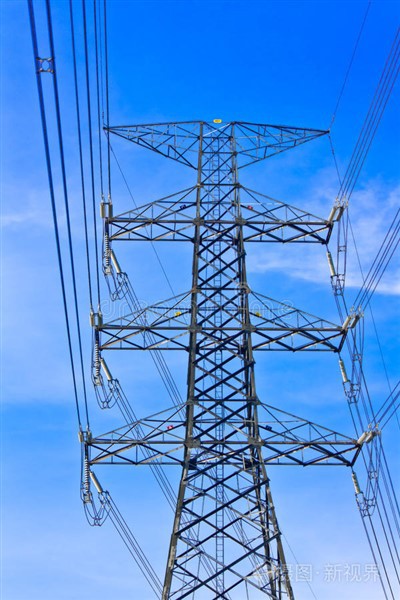
If you’re in the market for a power tower for your process, or you’re dealing with an existing tower that’s having stability issues, let’s talk. I’ve worked with plants across industries to design, install, and optimize power towers that run reliably, using both the math rules we discussed and real-world operational data to avoid the pitfalls of multiple steady states. We don’t cut corners on the engineering, because I learned early on that the math behind power towers isn’t just a class project—it’s what keeps your product on spec, your downtime low, and your operation running smoothly. Reach out to discuss your project, and we can walk through the math and the design to get you the power tower that fits your needs.
Power Transmission Towers References
- Knoebel, R. (1981). Exponentials Reiterated. The American Mathematical Monthly, 88(4), 235–252.
- Strogatz, S. H. (1994). Nonlinear Dynamics and Chaos: With Applications to Physics, Biology, Chemistry, and Engineering. Perseus Books.
- Smith, R. (2005). Distillation Dynamics and Control. Wiley-Interscience.
- Baker, I., & Rippon, P. J. (1991). Convergence of infinite exponentials. Mathematische Zeitschrift, 208(2), 203–223.
- Henze, G. (2012). Mathematical Foundations of Chemical Engineering. Springer.
Hebei Yifeng Steel Structure Co., Ltd.
As one of the most professional power towers manufacturers and suppliers in China, we offer a wide range of products with superior quality. Please feel free to buy cost-efficient power towers for sale here from our factory. Contact us for more details.
Address: Guangchuan Town Industrial Zone, Jing County, Hengshui City, Hebei Province
E-mail: hbyfgjg@163.com
WebSite: https://www.yf-powertowers.com/
