If you’ve ever worked in chemical manufacturing, food and beverage processing, pharmaceutical distribution, or even agricultural fertilizer logistics, you’ve probably run into IBC tanks—those big, rugged, stainless steel or plastic tanks that hold 275 to 330 gallons of liquid like a pro. But if you’ve only seen the single-walled ones that are super common for everyday water hauling or simple chemical storage, you might be wondering: why go double-walled? As an IBC tank supplier, I get asked this all the time, and it’s not just a “more is better” case. There’s a ton of science, safety, and cost-savvy thinking behind building a tank with two separate layers, not one. Let me break this down like I would to a new client who just walked into my warehouse looking for the right tank for their line of work. IBC Tank
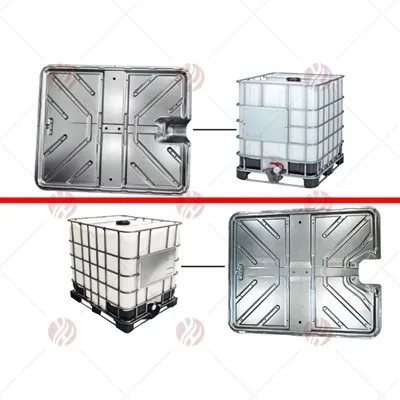
First, let’s get one thing straight: a double-walled IBC isn’t just a regular tank with an extra plastic jacket slapped on the outside. It’s a precision-engineered system where an inner tank (where your actual product lives) is sealed inside a second, slightly larger outer tank—with a gap between them that’s usually 1 to 3 inches wide. That gap isn’t empty, either. Most of the time, it’s either air, a specialized non-conductive liquid, or even a leak-detecting gel, depending on what you’re storing. Let’s start with the biggest reason everyone cares about: safety. I’m talking zero spillage, no environmental disasters, no OSHA (or EPA) fines that can put a small business under faster than a faulty pump.
Think about it: if you’re moving a 300-gallon batch of hydrochloric acid for a metal plating shop, or a food-grade corn syrup for a bakery supplier, a single-walled tank only has one layer between your product and whatever is around it. A truck bump, a pothole, a fork operator slamming into a stack—any of that can crack the inner tank, and suddenly you’ve got 300 gallons of hazardous or valuable liquid leaking out on the highway, into a parking lot, or across a factory floor. That’s not just a mess; that’s a legal nightmare. The EPA doesn’t play around with chemical spills, and many local governments have strict rules about storing liquids in industrial zones. A double-walled IBC contains that leak before it even gets out of the gap, so your driver can pull over, call a maintenance team, and fix the problem without a drop hitting the ground. Last year, I had a client who ran a small cleaning chemical company switch from single-walled to double-walled IBCs after a 200-gallon leak ruined their driver’s truck and landed them a $12,000 EPA fine. They saved enough in one fine alone to cover the cost of double-walled tanks for their entire fleet. That’s a real example, not just a sales pitch.
But safety isn’t just about leaks—it’s about protecting your product too. A lot of people don’t realize that the outside world can mess with what’s inside your IBC, just like the inside can mess with the outside. If you’re storing temperature-sensitive liquids, like biologics for pharma, or liquid nitrogen for lab use, that gap between the walls acts as insulation. Let’s do the math: a single-walled plastic IBC will let ambient temperature swing (say, 90°F during the day and 50°F at night in a warehouse) seep through in a matter of hours, making your product warm enough to spoil, or cold enough to solidify. The double wall cuts heat transfer by 40% to 60% depending on the insulation in the gap, so your product stays within its required temperature range longer. I had a craft brewery client a while back who was storing their unfiltered beer in single-walled IBCs for shipping to distribution centers. They kept getting complaints about beer going sour halfway through the country because temperature swings were causing small bacterial growth. Switched to double-walled IBCs with a foam-filled gap, and that problem vanished. No more returns, no more lost revenue—just consistent product on the shelves.
Another big one is pressure and structural integrity. Single-walled IBCs are fine for low-pressure, static storage, but if you’re moving liquids that expand or contract, or transporting them over rough terrain, the inner tank can flex too much and crack. Take liquid fertilizer, for example— it expands by about 5% when frozen, and that’s enough to burst a thin single-walled tank. The outer wall of a double-walled IBC adds extra rigidity, so when the inner tank expands and contracts, the outer layer holds it in place. We also design double-walled IBCs with pressure relief valves on the gap, so if the inner tank does start to crack, any liquid that seeps into the gap is vented safely, not pressurized into a bigger leak. For bulk chemical transport, that’s a non-negotiable feature—many states now require double-walled containers for flammable or corrosive liquids, and for good reason: a burst IBC on a highway can cause a multi-car accident, but a double-walled one almost never makes news for that.
Wait, but what about cost? I know what you’re thinking—double-walled tanks are more expensive upfront, right? So why would anyone bother? Let’s talk long-term, not just the initial price tag. First, the fines we mentioned earlier: an EPA spill fine for hazardous liquids can be anywhere from $3,000 to $37,500 per day, per violation. A double-walled IBC prevents that. Second, product loss: if a single-walled tank leaks, you lose every drop of that 300-gallon batch. Double-walled IBCs contain almost all of that product, so you only have to clean the gap and fix the inner tank, not replace the entire batch. Third, maintenance: double-walled IBCs last 2 to 3 times longer than single-walled ones because the outer wall protects the inner layer from dents, scratches, and UV damage when stored outside. We have a client who stores their pesticides outdoors year-round in double-walled IBCs; their single-walled counterparts from 5 years ago are all cracked and unusable, but their double-walled ones look almost new. When you factor in replacement costs, disposal fees for damaged tanks, and ongoing maintenance, double-walled IBCs end up being cheaper over 5 years. I see a lot of small businesses skip them to save a few bucks upfront, then end up spending way more in the long run. That’s not a win for anyone.
Also, let’s not forget about regulatory compliance. If you’re shipping liquids across state lines or internationally, most transportation agencies (like the DOT in the US, IMDG for international marine shipping, and IATA for air shipping) have specific rules about containers for hazardous materials. Many of these rules now mandate double-walled IBCs for liquids that are classified as corrosive, flammable, or toxic. If you show up to a shipping yard with a single-walled tank for a restricted liquid, they’ll turn you away, and you’ll have to re-package your entire shipment at a huge cost. Double-walled IBCs are pre-approved for most of these regulations, so you don’t have to jump through extra hoops to get your product shipped. That’s a huge time-saver, especially for small businesses that don’t have a big compliance team on staff.
Wait, are there downsides? No system is perfect, and I’ll be honest with you as a supplier—double-walled IBCs are a bit heavier, so you might have to adjust your forklift or truck capacity if you’re moving them around. They’re also a little more work to clean if the gap ever gets contaminated, but that’s a rare issue. Most of the time, the gap is sealed, so it’s not exposed to the product or the environment. We design them with easy access ports for inspection, so you can check the gap without taking the whole tank apart, which makes cleaning and maintenance super simple. For most industries, those small downsides are nothing compared to the benefits.
Let’s talk about what kinds of industries actually need double-walled IBCs, because not everyone needs them. If you’re just storing plain water for a construction site, or moving non-hazardous, stable liquids like vegetable oil for a local restaurant, a single-walled IBC is totally fine. But if you’re working with chemicals, pharma products, food and beverage that needs to stay temperature-stable, agricultural products like fertilizers or pesticides, or any liquid that could cause a spill that’s costly to you or the environment, double-walled is the way to go. We’ve shipped double-walled IBCs to everything from small family-owned wineries to big national chemical companies, and every single one has come back saying it was the best investment they made that year.
A lot of people also ask about the different types of double-walled IBCs, just to round this out. There are plastic-plastic double-walled IBCs, which are light, cheap, and perfect for food-grade liquids and non-hazardous chemicals. There are metal-plastic double-walled IBCs, where the outer layer is stainless steel for extra durability, great for heavy industrial use. And there are insulated double-walled IBCs with foam or liquid in the gap, which are for temperature-sensitive products like biologics or ice cream mix. We customize almost every double-walled IBC we sell to fit what the client needs—different sizes, different inner liners, different gap materials, whatever works for their product and their workflow.
At the end of the day, the purpose of a double-walled IBC tank isn’t just to be a fancy version of a regular tank. It’s about reducing risk, protecting your product, saving you money, and making sure you stay on the right side of regulations. I’ve seen too many clients cut corners on single-walled tanks, only to end up with a mess that costs them way more than the extra upfront for double-walled. As a supplier, my job isn’t just to sell you a tank—it’s to make sure you get the one that works for your needs, so you don’t have to deal with headaches later.

If you’re looking to replace your old single-walled IBCs, or just want to learn more about whether double-walled is right for your business, reach out to our team. We can walk you through the different options, help you calculate the cost savings, and even set up a demo so you can see how they work in person. No pressure, just straight talk about what will make your operations smoother and safer.
IBC Tank References:
- Occupational Safety and Health Administration (OSHA). 2022. “Hazardous Materials Storage and Handling Guidelines.”
- U.S. Environmental Protection Agency (EPA). 2021. “Spill Prevention, Control, and Countermeasure (SPCC) Rule for Bulk Liquid Containers.”
- International Maritime Organization (IMO). 2020. “International Maritime Dangerous Goods (IMDG) Code: Container Requirements for Liquid Bulk Cargo.”
- American Society of Mechanical Engineers (ASME). 2019. “Standard for Double-Walled Industrial Containers for Liquid Storage and Transport.”
Zhenjiang Yuanhai Packaging Co., Ltd.
We’re well-known as one of the leading IBC tank manufacturers and suppliers in China, featured by quality products and good price. Please rest assured to buy high-grade IBC tank for sale here from our factory. We also accept customized orders.
Address: No. 9, Danwu Road, Dantu District, Zhenjiang City
E-mail: chin_john@msn.com
WebSite: https://www.yhibc.com/
