Hey guys, let’s cut to the chase—if you’re here wondering “what’s the cost of a diamond die?”, you’re probably not just scrolling for random numbers. You’re either a wire drawing pro tired of bad dies that wear out too fast, or maybe you’re new to the game and don’t want to get hosed by a supplier who hides fine print. I’ve been in the diamond die game for 12 years, running the day-to-day at our shop (no fancy corporate suits, just a bunch of guys who’ve replaced enough dies to know every trick of the trade), so let’s break this down like we’re chatting over a coffee at the warehouse instead of a stuffy trade show. Diamond Dies
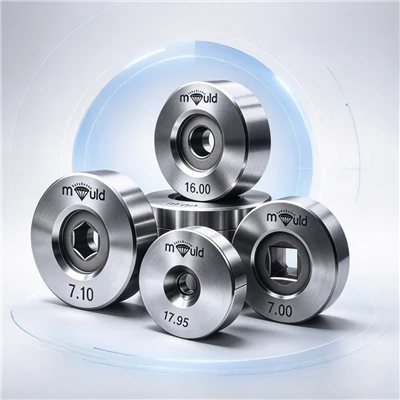
First off, let’s get one myth out of the way right now: diamond dies aren’t all the same. A $50 die and a $500 die might look identical on the shelf, but put ’em to work drawing 0.2mm copper wire for electronics vs. 5mm steel wire for rebar, and you’ll see the difference in two weeks vs. two years. That’s why there’s no one flat price for a diamond die—way too many variables go into making them, and cutting corners on any single one will bite you in the end (I’ve seen it way too many times with customers who tried to save a buck and had to replace dies every week).
Let’s start with the basics: what even is a diamond die? It’s a tiny, precision-made tool with a hole drilled (wait, no—eroded, technically) into a natural or synthetic diamond, used to pull metal wire through to get super specific diameters, tight tolerances, and smooth surfaces. The diamond is the heart of it, so its type is the first big cost driver. Natural vs. synthetic? Yeah, that’s a whole thing. Natural diamond dies used to be the gold standard back in the day, but synthetic diamond tech has come so far now that we only sell natural ones for super specific jobs—like drawing ultra-fine wire for medical devices or aerospace parts where every last bit of consistency matters. Natural diamonds are mined, sorted by clarity and hardness, and only the top 10% make the cut for dies, so those cost 2x to 3x more than synthetics. For most of our customers, synthetic polycrystalline diamond (PCD) or single-crystal diamond (SCD) is all they need, and it works just as well, if not better, if you get the right grade.
Next up is the size and tolerance of the die. If you need a die for 10mm wire, that’s way bigger than a 0.05mm die used for making wire for speaker coils, right? The hole’s so tiny on those ultra-fine dies that we have to use micro-EDM (electrical discharge machining) instead of traditional cutting tools, and even a tiny misalignment in the hole can throw the whole wire batch off. Tight tolerances are another cost factor—if you need a die with a tolerance of ±0.0001mm, that’s way harder to make than ±0.001mm, and it takes 3x the machining time. I once had a customer who thought we were overcharging for a 0.1mm die with tight tolerances, then came back a month later saying their cheap die made 10,000 feet of scrapped wire because it was off by 0.0008mm. Oops.
Then there’s the quality of the tool’s backing, called the “shank” or “holder.” A lot of cheap suppliers use cheap steel shanks that rust, bend, or don’t hold the diamond tight under pressure. Our dies use heat-treated tool steel shanks that are CNC-machined to fit perfectly, so there’s no wiggle. The way we secure the diamond into the shank also matters—we use a high-temperature brazing process that creates a seamless bond, so the diamond doesn’t crack or shift when you’re drawing wire at 100+ feet per minute. Cheap suppliers might use epoxy to glue the diamond in, which fails after a few runs, leaving you with a broken die and wasted wire. That small step alone adds 15-20% to the cost, but it’s worth every penny.
Wait, let’s not forget about custom vs. off-the-shelf dies. If you need a standard size die that we stock, we can ship it out in 24 hours, and those are way cheaper—usually $80 to $300 depending on size and diamond type. But if you need something custom, like a weird shape (say, a hex hole for special wire) or a size that’s not in our catalog, that takes extra engineering time and testing. Custom dies can run anywhere from $300 to $1,500 or more, especially if it’s for a super high-tolerance job. We just finished a custom die for a medical wire company that had a 0.03mm hole with ±0.00005mm tolerance—took us 3 weeks to make, but it’s lasted them 10x longer than the old dies they were using.
Another thing that affects cost: order quantity. If you’re just a small shop needing one or two dies, that’s straightforward. But if you’re a big manufacturer ordering 100 dies a month, we can give you a bulk discount. I tell all our customers: we’re not here to gouge small shops, but we also don’t lowball bulk orders because we have to keep the quality up. We’d rather have a long-term customer who orders 50 dies a year than a one-off who wants a cheap die that breaks in a week.
Now, let’s get to the actual numbers you’re here for. Like I said, it’s all over the place, but here’s a rough breakdown of what you can expect:
- Off-the-shelf synthetic diamond dies: $75 to $350 each. Most small to medium shops fit here—our average sell is around $120 for a standard size.
- Off-the-shelf natural diamond dies: $300 to $800 each. Only needed for ultra-fine or high-stress jobs.
- Custom synthetic diamond dies: $300 to $1,200 each. Depends on size, tolerance, and complexity.
- Custom natural diamond dies: $800 to $2,500 or more. Yeah, those are pricey, but they pay for themselves in long life.
Wait, but let’s talk total cost of ownership, not just upfront cost. A cheap die from a no-name supplier might cost $50, but it lasts 10,000 feet of wire. A good die from us is $150, but it lasts 50,000 feet. That means the cheap die costs $0.005 per foot, our die is $0.003 per foot. So you’re actually saving money with the better die, even though the upfront is higher. That’s the stuff most customers miss at first. I can’t count how many times we’ve had customers switch from cheap dies to ours and cut their die costs by 40% in a year.
What about hidden costs? Some suppliers will quote you a low price, then charge extra for shipping, or rush orders, or even the shank (wait, yeah—some cheap suppliers make you buy the shank separately, which adds another $20 to $50 per die). We don’t do that—our prices include the shank and standard shipping within the US. Rush orders are an extra 20% if you need it in 24 hours, but we only do that if the job’s feasible, no strings attached.
Now, let’s address when to splurge vs. save. If you’re drawing standard copper wire for cables, synthetic PCD dies are perfect—they’re cheap, last long enough, and you don’t need the extra precision. If you’re drawing ultra-fine wire for electronics, medical devices, or aerospace, splurge on SCD or natural diamond dies—they won’t wear out as fast, so your wire stays consistent and you don’t have to shut down production to change dies every few days. If you’re a small shop with low-volume jobs, off-the-shelf dies are fine, but if you’re running 24/7, custom dies tailored to your line will save you way more in downtime than the extra cost upfront.

At the end of the day, the cost of a diamond die isn’t just about the materials or machining—it’s about what it does for your business. A bad die can cause downtime, scrap wire, inconsistent product, and lost customers. A good die keeps your line running, your product on spec, and your costs lower in the long run.
Wire Drawing Dies If you’re ready to stop guessing and get a real quote that fits your needs, hit us up. Just tell me what wire you’re drawing, the size, tolerance, how many dies you need, and I’ll hook you up with a transparent price—no fine print, no hidden fees, just a die that works when you need it. We’ve got 12 years of experience, we test every die before it leaves our shop, and we stand behind every single one we sell. No runaround, no jargon, just real answers for real wire drawers.
References
- Diamond Dies: Types, Applications, and Cost Drivers. Wire Journal International, 2022.
- Polycrystalline Diamond (PCD) vs. Single-Crystal Diamond (SCD) Dies for Wire Drawing. Precision Engineering Journal, 2021.
- Total Cost of Ownership Analysis for Wire Drawing Tooling. Industrial Tooling Review, 2023.
Hejian Strains Of Hard Alloy Mould Co., Ltd.
As one of the most professional diamond dies manufacturers and suppliers in China, we’re featured by quality products and good service. Please rest assured to wholesale durable diamond dies made in China here from our factory. Also, custom service is available.
Address: Tangzhuang Industrial Park, Hejian City, Hebei Province
E-mail: limei@mouldzy.com
WebSite: https://www.mouldzy.com/
