If you’ve ever stood next to a processing plant, refinery, or chemical manufacturing facility, you might have noticed the faint, steady hiss coming from tall pipes – that’s not a leak, it’s a pressure relief valve (PRV) doing its job. For 12 years, I’ve been a PRV supplier, and I can’t tell you how many times plant maintenance teams have walked into my office or hopped on a call asking the same question: “How often does OSHA make us test these things?” It’s a fair question, because cutting corners on PRV maintenance isn’t just a safety risk – it can lead to fines, unplanned shutdowns, and even catastrophic accidents. Let’s break down the OSHA rules, the real-world nuances that don’t make the regulation book, and what that means for you as a plant operator or maintenance manager. Pressure Relief Valve

First, let’s get one thing straight: OSHA doesn’t print a single line of text that says “test your PRV every X number of days” – and that’s not a mistake. The Occupational Safety and Health Administration’s guidelines on pressure relief valves fall under two core standards: Process Safety Management (PSM) at 29 CFR 1910.119, and General Industry standards at 29 CFR 1910.106 for flammable liquids and 29 CFR 1910.107 for spray finishing. The reason there’s no one-size-fits-all frequency is because OSHA frames PRV requirements around risk, not a generic timeline. A PRV on a small, low-pressure water heater in a commercial laundry faces way different conditions than a PRV on a high-pressure reactor holding flammable ammonia – so why would their testing schedule be the same?
Let’s start with the PSM standard, which applies to facilities that handle over 10,000 pounds of a highly hazardous chemical (HHC) listed in OSHA’s 1910.119 appendix. This is the rule that trips up most refineries, chemical plants, and pharmaceutical manufacturing sites. Section (j)(2)(i) of PSM requires PRVs to be “inspected and tested at intervals consistent with good engineering practice to ensure their reliability.” Wait, “good engineering practice” – that’s the fine print that makes everyone pause. OSHA doesn’t define that, but it points to consensus standards from organizations like the American Petroleum Institute (API), the American Society of Mechanical Engineers (ASME), and the National Board of Boiler and Pressure Vessel Inspectors. Those are the real rulebook for how often you test.
For most common PRVs used in HHC services, API Standard 520, which covers the sizing, selection, and installation of PRVs, lays out the baseline. API 520 Part II, the maintenance guide, says that for valves in “normal” service – meaning they don’t activate every day, operate in stable temperature and pressure, and handle non-corrosive fluids – the maximum interval between full pop tests (the test where you lift the valve disc to confirm it opens at the set pressure) is five years. But that’s a maximum, not a requirement. If your valve is in a more aggressive environment, that timeline drops fast.
I’ve worked with a refinery in the Gulf Coast where the PRVs on their crude oil heaters sit in a space with high humidity and hydrogen sulfide exposure – a corrosive mix. Their original five-year test interval cut out after two years, and OSHA inspectors flagged it during a routine audit. The valve’s spring had rusted slightly, so it wouldn’t open at the correct pressure when tested. That’s the kind of real-world scenario the API and OSHA rules account for: your testing frequency depends on your valve’s operating conditions, not just a number pulled out of a manual.
Now, what about general industry facilities that don’t fall under PSM? A food processing plant with a steam boiler, a paper mill with compressed air systems, or a tank farm storing heating oil – those follow different OSHA rules, but the logic is the same. For boiler PRVs, OSHA’s 29 CFR 1910.10(a) requires valves to be “tested in accordance with the American Society of Mechanical Engineers Boiler and Pressure Vessel Code” – which, for power boilers, sets the full test interval at three years, with a weekly manual pop test to confirm the valve isn’t stuck. For stationary storage tanks holding flammable liquids, 29 CFR 1910.106(b)(3) requires PRVs to be “inspected and tested for proper operation at intervals not exceeding five years” – again, with a note that facilities can adjust that based on local conditions.
But here’s where most people get it wrong: OSHA doesn’t just care about the full pop test. Routine maintenance and testing fall into two categories, and mixing them up is a common compliance mistake. The first is the “in-service test” – that’s the quick check you can do without removing the valve from the line. For steam boiler valves, that’s a manual test where you lift the valve lever for a few seconds to make sure it moves freely, which you’re supposed to do weekly. I’ve seen plants skip these weekly tests for years, only to have a valve seize up and fail during an overpressure event. Last year, a food processing plant in the Midwest had a boiler overpressure incident because their PRV had been stuck for 18 months – they’d only done the annual full test, not the weekly checks. OSHA fined them $87,000, and they had to shut down for two weeks to repair the boiler. That’s the cost of cutting corners on the low-stakes, frequent tests.
The second type is the “out-of-service calibration and test” – this is the full, rigorous test where you remove the valve, send it to a calibration lab, or test it on-site with a portable test rig to confirm it opens at the exact set pressure, closes properly, and has the correct reseating pressure. This is the test that OSHA references when it talks about intervals, and the frequency here is where risk really dictates. OSHA’s PSM standard also requires a process hazard analysis (PHA) every five years for HHC facilities – and that PHA is where you should document your PRV testing frequency. If your PHA identifies your PRV as a critical safety component (which most are, if they protect a vessel holding 10,000 pounds or more of HHC), you need to adjust your test interval accordingly.
I’ve had a pharmaceutical client that makes insulin, whose PRVs on their bioreactors handle sensitive, corrosive fermentation fluids. Their PHA team decided that a five-year interval was too risky, because any valve failure would lead to a batch loss (worth over $2 million) and a potential release of sterile fluids. We worked with them to adjust their test interval to every two years, and we helped them set up a routine that aligns with both OSHA rules and their operational needs. That’s the sweet spot: complying with OSHA isn’t just checking a box, it’s matching your test schedule to your specific equipment and risks.
Now, let’s talk about OSHA enforcement history, because numbers don’t lie. Between 2018 and 2023, OSHA issued over 1,200 violations related to pressure relief valves, with total fines exceeding $18 million. The most common violations? Failing to conduct required tests, and using an interval longer than what’s recommended by consensus standards. OSHA inspectors don’t just show up and guess – they look for documentation. If your maintenance log says your PRV was last tested three years ago, and the API recommends five for your service, you’re probably fine. But if your log says “last tested 6 years ago” and your valve is in a service that calls for five, that’s a clear violation.
There’s a myth out there that you can extend your test interval indefinitely if you do regular inspections, but that’s not true. OSHA’s PSM standard says that your interval has to be based on “good engineering practice” which is updated regularly. For example, API updated its 520 standard in 2022 to add guidance for valves handling hydrogen, lowering the recommended interval from five to three years for high-hydrogen environments. If your plant didn’t adjust your test schedule after that update, and an inspector shows up, that’s a problem – even if your valve was working fine when they checked.
So, what does this mean for you? If you’re a plant operator or maintenance manager, the first step isn’t to call a PRV supplier and ask “how often to test.” It’s to pull your OSHA compliance documentation, check what standard applies to your equipment, and then work backwards. Here’s a quick checklist:
- Confirm if your facility is covered by PSM (29 CFR 1910.119) or general industry standards (1910.106, 1910.10, etc.)
- Find the consensus standard (API 520, ASME BPVC, NBBI) referenced in your OSHA rule
- Document the conditions your PRV operates in: corrosive fluids, high vibration, frequent activation?
- Update your process hazard analysis to reflect your specific risk, not just a generic timeline
For me, as a PRV supplier, I’ve seen too many plants wait until an OSHA audit to adjust their testing schedule. I have a team of engineers who can help you review your existing maintenance logs, cross-reference them with OSHA and consensus standards, and recommend a test schedule that’s compliant and tailored to your equipment. We also supply PRVs designed for high-risk environments, so if you’re operating in a corrosive or high-vibration space, we can help you select a valve that meets OSHA requirements and reduces the frequency of tests you need to run.
At the end of the day, OSHA’s PRV rules aren’t designed to burden you – they’re designed to prevent preventable accidents. A PRV failure isn’t just a regulatory problem; it’s a safety problem for your employees, a financial problem for your business, and a community problem if it leads to a release of hazardous materials. The answer to “how often to test?” isn’t a number in a OSHA manual – it’s a balance of your specific equipment, your risks, and the rules that keep everyone safe.
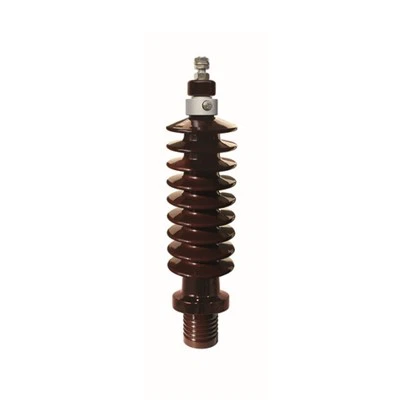
If you’re not sure if your current PRV testing schedule meets OSHA requirements, or you’re looking for high-quality PRVs that align with OSHA standards, reach out to our team to discuss your needs. We’ve worked with facilities of all sizes, from small general industry plants to large refineries, to make sure their PRV programs are compliant, reliable, and built to last.
Brass Valves References
- Occupational Safety and Health Administration. (2024). Process Safety Management of Highly Hazardous Chemicals. 29 CFR 1910.119.
- American Petroleum Institute. (2020). Sizing, Selection, and Installation of Pressure-Relieving Devices in Refineries, Part II – Operation, Maintenance, and Inspection. API Standard 520.
- American Society of Mechanical Engineers. (2023). Boiler and Pressure Vessel Code, Section VIII: Pressure Vessels. ASME BPVC VIII.
- Occupational Safety and Health Administration. (2024). General Industry Standards: Flammable Liquids. 29 CFR 1910.106.
- National Board of Boiler and Pressure Vessel Inspectors. (2022). Recommended Rules for Inspecting Pressure Relief Valves. NBBI Bulletin 2022-01.
Hebei Anmei Electrical Equipment Co., Ltd.
Hebei Anmei Electrical Equipment Co., Ltd. is one of the most professional pressure relief valve manufacturers and suppliers in China, specialized in providing high quality products and service. Please feel free to buy customized pressure relief valve made in China here from our factory. Contact us for quotation.
Address: Hejian Yingzhou Economic Development Zone, Cangzhou City, Hebei Province
E-mail: sales@anmeielec.com
WebSite: https://www.anmeibushing.com/
