Hey there, I’m Jake, and if you’ve ever stood on a construction site, farm field, or utility right-of-way staring at those wobbly little wooden or plastic stakes marked with a mix of numbers, letters, and weird squiggles, you’re not alone. For over a decade, I’ve supplied marker stakes to teams across North America—from small residential landscapers to regional pipeline companies—and one question I get more than any other is: “What do all these markings actually mean?” Marker Stakes
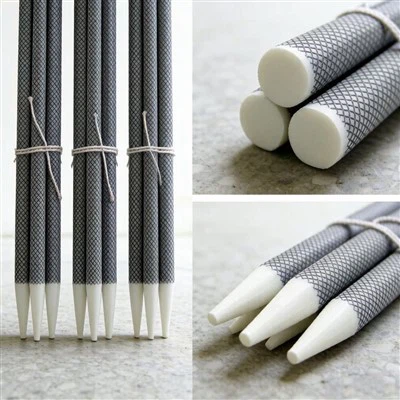
Most people assume grade stakes are just basic placeholders. Nope. They’re the blueprint’s tiny, on-ground translation, and misreading them can set you back thousands of dollars, delay projects for weeks, or even lead to safety hazards. Last year, I had a contractor client call me in a panic because his crew dug 18 inches too deep on a septic line—all because he misread a single grade marking on a stake we’d supplied. That mistake alone cost him $12,000 in rework, plus a week of rainy delays that pushed his client’s closing date back.
So let’s break this down, no fancy engineering jargon—just the real-world stuff I’ve learned hauling stakes to job sites and walking alongside crews trying not to trip over them. First, we need to start with the basics: what grade even means here? When construction teams talk about grade, they’re talking about elevation—height above a fixed reference point, almost always mean sea level (MSL) or a local benchmark set by the project’s surveyor. Stakes use a system called “engineering grades” that simplifies this into easy-to-read numbers, no decimal points to fumble with (that’s a relief, trust me).
Now, let’s talk about the different types of marker stakes we supply, because not all stakes use the same marking system. Most of our standard grade stakes fall into two main categories: construction grade stakes and land survey stakes. Construction grade stakes (the ones we sell most of) are used for building foundations, roads, utility lines, and septic systems. They’re usually 2×2 wooden stakes with bright paint—orange for general construction, white for utilities, blue for water lines, yellow for gas, that sort of thing. Survey stakes, on the other hand, are taller, sturdier, and often use metal or heavy-duty plastic, with more precise markings tied directly to the project’s official survey.
When it comes to reading the actual numbers, let’s start with the most common marking you’ll see on a construction grade stake: the “grade mark” itself. It’s almost always two numbers, like 125 or 108, sometimes with a plus or minus sign next to it, or a letter like “A” or “B” above the numbers. Here’s the rule I drilled into every new crew member that works with our stakes: the first number is not the height of the ground. It’s the “base grade” of the stake, and the second number is the offset from that base. Wait, let’s make that concrete (pun intended). If you see a stake marked “110 +2,” that means the ground at the stake is 2 units (almost always feet, but sometimes hundredths of a foot for precision work) above the project’s planned grade for that spot. If it’s “110 -3,” that’s 3 units below the planned grade. The “110” is the project’s target grade for that specific line—say, the centerline of a road or the edge of a foundation.
Wait, but what about those stakes that have a little cross on them, or a different color? Oh right, the “benchmark stake” is a special type we supply for project start points. That cross means that spot is a reference point, not the actual grade of the area around it. For example, if a benchmark stake says “BM 102” on it, that’s tied to the official project benchmark, so any other stake’s grade is measured relative to that 102 number. I once had a new landscaper use a benchmark stake’s number as his target grade for a patio, and it ended up 6 inches too high because he didn’t realize benchmarks are fixed, not working grades.
Now, let’s get into the tricky part that trips up even experienced crews: the difference between “invert grade” and “finish grade.” We supply a lot of stakes for utility lines, and invert grade is super important there. Invert grade is the bottom of a pipe, drain, or sewer line. So if a pipe stake is marked “I 95 -4,” that means the bottom of the pipe needs to be 4 units below the project’s base grade of 95. Finish grade, on the other hand, is the final ground level you’ll see after all construction is done—so that’s what a landscaping stake or final foundation stake will have. Last month, a pipeline foreman told me his crew had to re-grade 2 miles of line because he mixed up invert and finish grade on 12 stakes. That’s the kind of mistake that makes suppliers like me wish we put a tiny cheat sheet on every stake, but we can’t (size limits, ya know).
What about survey stakes? They’re more precise, usually marked with three numbers plus a letter, like “G2 112.45.” The “G2” here refers to the survey grid’s designator for that section of the project, and the numbers give you the exact elevation to the hundredth of a foot—way more specific than construction grade stakes. These are used for things like airport runways or commercial buildings where even a 0.1 foot difference can throw things off. We only supply heavy-duty survey stakes for projects that need that level of accuracy, because regular wooden stakes can shift in the rain or get knocked over by construction equipment.
Now, let’s talk about the little extra markings that are easy to miss, and that’s where most misreads happen. A lot of our stakes have a tiny triangle drawn on the side, pointing either up or down. An upward-pointing triangle means the grade at that spot is higher than the next stake along the line—so you need to dig down or build up to match the planned grade. A downward-pointing triangle means the grade is lower than the next stake, so you’ll be going uphill as you move along the line. There’s also the “station” number you’ll see on almost every stake, like “STA 12 + 50.” Station numbers are miles or feet along the project’s path, so STA 12 is 12 miles from the project’s start, plus 50 feet. This is how surveyors and crews track exactly where they are on a sprawling project—no more guessing if you’re at the right stretch of road.
Wait, let’s clear up a common myth I hear all the time: the numbers on the stake aren’t the actual elevation above sea level. I know that’s what makes sense, but no—most grade stakes use a “local datum,” which is a custom reference point set by the project’s surveyor. For example, a residential construction project might set their local datum as 100, so every grade number is relative to that. That’s why you can’t compare a 110 on a residential stake to a 110 on a commercial project—they’re referencing different starting points. I once had a client bring me a stake from a different job, saying it was wrong because the number didn’t match his current project, and that’s exactly why. That’s why we always include a small sticker on our stakes noting the project’s datum, so crews don’t make that mistake.
Another thing: weather and wear. We use pressure-treated wooden stakes for most of our construction grade stakes, and UV-resistant paint, but they still fade, get scratched, or get knocked over by heavy equipment. If a stake’s marking is smudged or half-gone, don’t guess—use a tape measure and the project plans, or grab a new stake. We get calls every week from contractors who need replacement stakes because their old ones got damaged, and it’s way cheaper to order a new set than to dig 20 feet in the wrong place.
Let’s throw in a real example from last summer to make this tangible. A crew building a retail parking lot in Indianapolis ordered 500 grade stakes from us, and halfway through the job, they called saying half their stakes had wrong numbers. When I walked the site with their foreman, I realized they’d been looking at the back of the stakes—where we sometimes put additional notes—instead of the front grade markings. The front of every stake was clearly marked with the grade, station number, and a triangle, but they’d flipped them around. That’s the kind of silly mistake that happens when you’re working 12-hour days in the sun. So a quick tip: always look for the bright paint side of the stake—that’s the side with the official markings, facing the direction of the project’s line.
Now, let’s cover the safety angle, because this isn’t just about project timelines—it’s about people. If you’re digging a utility line, misreading the grade could mean hitting a gas line, a water main, or even a power line. Every year, the Pipeline and Hazardous Materials Safety Administration reports thousands of incidents from misread or unmarked grade stakes. We design our stakes with high-visibility paint and bold, easy-to-read numbers for that exact reason—no squinting in the bright sun or muddy rain. We also supply reflective stakes for night crews, so you don’t trip over them and can still read the markings after dark.
Wait, what about when a stake has a letter like “C” or “B” next to the grade number? That’s usually a section designation, for when a project is split into multiple phases. For example, phase one of a housing development will have stakes marked with “C” for the cul-de-sac section, and “B” for the main street. That keeps crews from mixing up grades between different parts of the project. I always tell new customers to label their stake stacks by section too—don’t just dump all the stakes in one pile, because you’ll waste an hour digging through to find the right one for your current spot.
Let’s go over a quick cheat sheet you can keep in your truck for any job:
- First, identify the stake type: General construction? Bright orange paint. Utilities? Color-coded (blue for water, yellow for gas, etc.). Survey work? Tall, sturdy, precise numbers.
- Locate the bright paint side— that’s where the official grade markings are.
- The main number (e.g., 105) is the project’s base grade for that spot.
- The + or – number tells you how far above or below that base the actual ground is. So “105 +3” = 3 units above planned grade; “105 -2” = 2 units below.
- Look for triangles: Up = grade gets higher along the line; Down = grade gets lower.
- Station numbers (STA X + Y) tell you exactly where you are on the project—no more guessing.
- Benchmark stakes with crosses are reference points, not working grades.
I want to be clear here—this isn’t rocket science, but it takes a little practice. When I started in this business, I thought grade stakes were just something to hammer into the ground and forget about. But after seeing that septic line mess cost a contractor $12,000, I started making it a point to walk every new customer through the basics, because preventing that kind of mistake is way better than fixing it.
Over the years, we’ve updated our stakes to make reading easier too. We added bold, 2-inch numbers instead of tiny ones, made the + and – signs bigger, and even added a small notch at the bottom of grade stakes to line up with the ground level, so you can tell at a glance if you’re on target. We also supply free quick-reference guides with every bulk order, so crews don’t have to try to memorize all this on the fly.
If you’re still confused, here’s the pro tip I give: pull up the project’s site plan and match the station number on the stake to the plan’s corresponding section. The plan will tell you exactly what the grade should be, so you can cross-reference it with the stake’s marking. That’s the fail-safe way to avoid misreads—don’t rely on the stake alone, use the plan too.
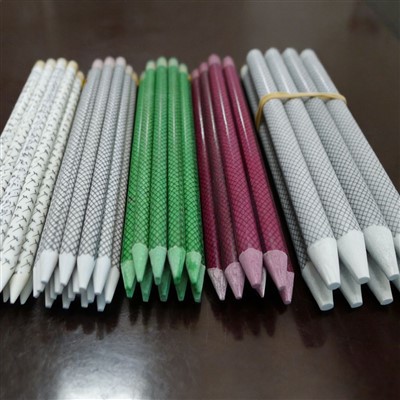
At the end of the day, grade stakes are one of the most underrated tools on any job site. They keep projects on track, prevent costly mistakes, and most importantly, keep crews safe. If you’re working on a project and you’re not sure about a marking, don’t guess—order fresh stakes from us, or reach out to figure it out. We supply stakes for every job, big or small, and we’re here to help you get it right the first time. If you have questions about our grade marking stakes, or want to place an order for your next project, feel free to connect with our team for a consultation.
FRP Ladder Rail Profiles References:
- Occupational Safety and Health Administration (OSHA). Construction Safety and Health Regulations for Excavations. 29 CFR Part 1926, Subpart P.
- American Society of Civil Engineers (ASCE). Standard Practice for Pipe Invert Grade and Alignment for Municipal Sewer and Water Pipelines. ASCE MOP 118.
- Pipeline and Hazardous Materials Safety Administration (PHMSA). National Incident Database: 2022–2023 Utility Line Incident Reports.
Yizheng Wanteng Composites Co., Ltd.
As one of the most professional marker stakes manufacturers and suppliers in China, we’re featured by quality products and good service. Please rest assured to wholesale bulk slip-resistant marker stakes for sale here from our factory. Contact us for pricelist.
Address: No.20 Longyi Road, Qingshan Town Industrial Park, Yizheng City, Jiangsu Province, China
E-mail: mark@wantfrp.com
WebSite: https://www.wantfrp.com/
