If you’ve ever stood on the floor of a metal fabricating, stamping, or parts finishing shop, you’ve likely walked past conveying and straightening tables—those sturdy, belt-driven or roller-mounted workhorses that move raw stock, stamped parts, or processed components from one workstation to the next, often straightening warped coils or flat sheets mid-transit. As a supplier of the parts that keep these tables running, I get asked a lot by fabricators, maintenance techs, and plant managers: “Why does this table need a gearbox? Why not just hook the motor directly to the rollers or the belt?” It’s a fair question, especially for teams operating on tight budgets or used to simplifying equipment setups. Over 12 years of supplying precision parts for these tables, I’ve seen first-hand how the gearbox isn’t just a random add-on—it’s the backbone of a table’s performance, longevity, and ability to do the job it’s built for. Let’s break down exactly what role the gearbox plays in these tables, and why skimping on it is never the move. Conveying and Straightening Table Parts
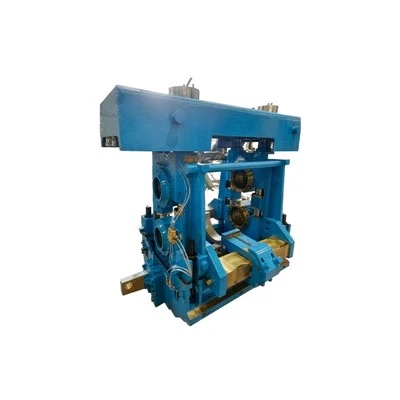
First, let’s ground this in how conveying and straightening tables actually work, because their needs are way more specific than, say, a residential garage door opener or a simple fan. Conveying tables’ core job is consistent, controlled movement of material—most commonly metal coils, flat sheets, or small stamped parts weighing anywhere from a few ounces to several tons. Straightening tables, a subset of these, add an extra layer: they use a series of staggered rollers to bend warped or uneven material back to a flat, uniform shape, which is non-negotiable for downstream processes like laser cutting, stamping, or welding. For either type of table, the motor generates rotational power, but that raw power is useless unless it’s tuned to match the table’s unique load and speed requirements. That’s where the gearbox steps in.
Let’s start with the most basic function: speed adjustment. Most electric motors, especially the 3-phase AC workhorses used in industrial tables, spin at thousands of rotations per minute (RPM)—think 1,750 or 3,500 RPM for standard models. Conveying tables, though, only need to move material at a glacial pace relative to that—usually 5 to 50 feet per minute, depending on the application. A 10-foot wide straightening table processing 10-gauge steel, for example, doesn’t need its rollers spinning 3,000 times a minute; that would send the sheet flying off the table before the straightening rollers could do their work. The gearbox reduces the motor’s high input RPM to a much lower, controlled output RPM for the table’s rollers or belt, using a set of interlocking gears matched to the exact speed needed. Without that gear reduction, the table would be too fast to move material safely or accurately, let alone perform straightening. I learned this early on: a fabricator I worked with in Ohio tried to skip a gearbox on a small straightening table for thin aluminum, and their first test run ended with a sheet crumpled at the end of the line because the rollers spun too fast to bend the material evenly. The gearbox fixed that immediately, dropping the roller speed to 25 RPM and giving the straightening mechanism time to work.
Next, and just as critical, is torque multiplication. Torque is the rotational force that gets work done—think of it as the “push” the table needs to move heavy material or overcome friction. Raw motor power is measured in kilowatts or horsepower, but how much of that actually translates to usable force depends entirely on torque, which is tied directly to speed. Since we already established that these tables need low RPM, that low speed naturally means low torque on its own—if you tried to pull a 2,000-pound steel coil with a motor spinning at 3,000 RPM, it wouldn’t have enough force to turn even a small roller. The gearbox solves this via gear ratio: a higher ratio (more gears, or larger driving gears paired with smaller driven gears) multiplies the motor’s torque output, turning that wimpy low-RPM force into the heavy-lifting power the table needs. For a heavy-duty conveying table moving full metal coils, the gearbox is sized to deliver enough torque to overcome the coil’s weight, plus the friction from the rollers and any resistance from a straightening process. I’ve supplied custom gear sets for tables used in automotive stamping plants that move 10,000-pound coils, and without the gearbox’s torque boost, those coils would never budge an inch. Another key point here: this torque multiplication doesn’t drain power or create unnecessary wear when sized correctly—its optimized to match the table’s load, so you don’t get wasted energy or premature part failure.
Then there’s speed and torque tuning for process control, which is where conveying and straightening tables differ from generic conveyor systems. Straightening tables, for example, require extremely consistent speed to do their job right. If a roller spins a few RPM faster than the ones adjacent to it, it will pull the sheet off-kilter, leading to uneven straightening, material waste, or even safety hazards. A good gearbox doesn’t just adjust speed—it delivers uniform, repeatable RPM across every roller in the table. Most tables have multiple drive rollers, all connected via a gear train, and the gearbox syncs their speed so every part of the material moves at the same rate. I once worked with a solar panel parts manufacturer that was getting 15% scrap on their straightened aluminum frames because their old table had mismatched roller speeds. When we upgraded their gearbox to a precision helical gear unit (quieter, smoother, and more consistent than older spur gear models), their scrap dropped to under 2% within a month. That’s the direct impact of the gearbox’s role in process consistency, not just movement.
I also can’t overlook load balancing and reducing wear on the rest of the system. Conveying and straightening tables deal with variable loads all the time—one day they’re moving a thin, light sheet, the next a heavy coil, or a warped part that creates extra resistance. A gearbox acts as a buffer between the high-power motor and the table’s rollers, distributing that load evenly across the gears rather than straining the motor or the roller shafts directly. If you hook a motor straight to a heavy roller, every time the load spikes (like a stuck part or a thick sheet getting pulled through), the motor has to work extra hard, leading to overheating, premature bearing failure, or even broken shafts. The gearbox absorbs that variable load, transmitting only the necessary force to the rollers, which extends the life of every other part of the table. I track this with all my clients: tables with properly sized gearboxes have a 30-40% longer lifespan than ones without, based on the maintenance logs I’ve reviewed over the years. That’s a huge cost saver for plant managers, who are always dealing with downtime and replacement parts.
Wait, but let’s address a common misconception here: not all gearboxes are the same, and their role changes slightly based on the table type. A simple light-duty conveying table for moving small plastic parts won’t need a massive gearbox—its job is just low-speed movement, so a compact worm gear unit works fine. A heavy-duty straightening table for thick steel, though, needs a robust helical or planetary gearbox that can handle high torque and consistent load over long runs. I’ve had fabricators come to me asking for a “generic gearbox” to save money, but that’s a mistake. The gearbox has to be matched to the table’s specific application: load weight, material type, desired speed, and even operating environment (like dusty foundry floors vs. climate-controlled electronics shops). A gearbox that works for a table stamping small parts won’t work for a table processing 2-inch thick steel plate.
Another thing I’ve noticed over the years: many new plant operators don’t realize that the gearbox is also a key part of safety. Conveying and straightening tables are moving heavy material, and if they malfunction, it’s a serious hazard. A properly functioning gearbox ensures the table starts and stops smoothly, without sudden lurches that could jostle material or send it flying. I remember a client in Texas who had an unguarded conveyor table without a gearbox; when a heavy steel plate got caught, the motor’s sudden torque spike made the table lurch forward, sending the plate into a nearby worker’s safety barrier and damaging it. Adding a gearbox with a torque limiter (a feature some units have) prevented that exact issue, as it would stop the motor if the load got too high, stopping the table before the plate could lurch. That’s a safety role that’s easy to overlook, but it’s non-negotiable for industrial settings.
Now, to circle back to why this matters for anyone relying on conveying and straightening tables. When you’re choosing parts for these tables, the gearbox isn’t an afterthought—it’s a core component that ties together speed, torque, process accuracy, longevity, and safety. Cutting corners on a cheap, mismatched gearbox will lead to more downtime, higher maintenance costs, more scrap material, and even safety incidents. I’ve seen too many clients try to save a few hundred dollars on a generic gearbox, only to spend thousands in repairs and lost production within a year.
If you’re working on a conveying or straightening table, whether you’re building new equipment or maintaining an existing line, getting the gearbox right is half the battle. As a supplier of precision parts for these tables, I work closely with teams to match the right gearbox to their specific needs, whether that’s a compact unit for a light-duty application or a heavy-duty torque model for high-load industrial use. If you’re looking to upgrade a gearbox on your table, or just want to make sure your current setup is running as efficiently as possible, feel free to reach out to discuss your requirements. We can help you find the right parts to keep your tables moving, straightening, and operating at peak performance.
Transmission and Fastener Parts Reference:
Industrial Gear Drives: Selection and Application. American Gear Manufacturers Association, 2018.
Material Handling Conveyors: Design, Selection, and Operation. McGraw-Hill, 2020.
Straightening Processes for Metal Sheets and Plates. Elsevier, 2019.
Jingjiang Jingyi Metallurgical Technology Co., Ltd.
With abundant experience, we are one of the most reliable conveying and straightening table parts manufacturers and suppliers in China. We warmly welcome you to wholesale customized conveying and straightening table parts made in China here from our factory. If you have any enquiry about quotation, please feel free to email us.
Address: No.5 Jianghe Road, Xinqiao Town, Jingjiang City, Jiangsu Province
E-mail: Lcbin1974@163.com
WebSite: https://www.jymetallurgical.com/
