Hey there, let’s cut the crap – if you’re running or sourcing a PVC gypsum board production line, you already know safety isn’t just a box to tick. It’s the thing that keeps your workers showing up every day, your line from blowing up mid-shift, and your products from getting stuck at customs because some cert is missing. I’ve been selling production lines for this exact stuff for like 12 years now, seen so many clients mess up by skipping critical certifications and wasting hundreds of grand on reworks or delays. Today I’m breaking down exactly what safety certifications you actually need, no fluff, just real talk from someone who’s stood in those factories late at night fixing line issues. PVC Gypsum Board Production Line
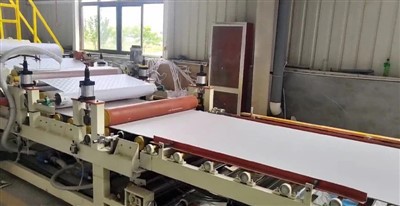
First off, let’s get one thing straight – PVC gypsum board production isn’t some tiny setup. You’ve got huge mixers grinding gypsum rock, giant kilns baking the board, high-voltage wiring running the whole line, and that PVC coating part where you’re dealing with solvents that are basically flammable gas. Cut corners on safety here, and you’re not just risking fines – you’re risking a fire that takes out half your factory, or worse, a worker getting hurt. I’ve seen a client in Mexico skip a cert on their mixer’s guard system, and a guy lost a finger when his glove got pulled in – cost him more than the line itself in comp and downtime. That’s why these certs aren’t just paperwork.
Let’s start with the big one for electrical and mechanical safety: CE Marking, right? Wait, but hold on – not just any CE. The EN ISO 12100 standard is non-negotiable here. That’s the one that covers risk assessment for machinery, and it’s mandatory if you’re selling to the EU, which is a huge market. Let me explain – every moving part on your line (those conveyor belts, the roll formers for PVC, the cutting saws) has to have guards, emergency stop buttons placed every 10 feet (not just one by the control room), and interlocks that shut the line down if a guard is open. The EN ISO 12100 audit checks that – I’ve had a few lines come back from clients who tried to install cheap guards they bought locally, and the auditors flag it so fast it’s ridiculous. Also, CE covers electrical safety too – the EN 60204-1 standard for industrial machinery wiring. No exposed wires, proper grounding, overload protection for those giant motors on the mixer. If you’re selling to North America, it’s UL Certification instead of CE, same vibe but different regional standard – UL 508A for control panels, UL 61010 for processing equipment. I always tell clients to pick the cert that matches their target market first, because re-certifying later is a nightmare.
Next up, the part no one talks about enough: fire and explosion safety for the PVC coating section. That’s a ticking time bomb, honestly. The PVC resin and the solvents used in the coating process are super flammable, and when they’re vaporized in a closed space like a coating chamber, they can ignite if there’s even a tiny spark. So NFPA 70 (National Electrical Code) if you’re in the US, or EN 60079 for ATEX certification if EU-based, is critical. ATEX covers equipment used in explosive atmospheres, so your motors, wiring, even the lighting in the coating area has to be explosion-proof. No regular light bulbs – those can crack and spark. Also, these certs require that you have proper ventilation systems that pull the solvent fumes out before they build up, and fire suppression systems (like clean agent, not water, because water can spread PVC fires) that trigger automatically. I had a client in Brazil skip ATEX a few years back, and their line almost burned down because a faulty motor sparked in the coating booth. They had to shut down for 3 months to rework the whole section – lost so much revenue, all because they tried to save a few bucks on the cert.
Then there’s materials safety for the finished boards, because let’s be real – no one wants to sell boards that are toxic. PVC gypsum boards are used in homes, offices, schools, so you can’t have them leaching harmful chemicals or releasing fumes. So EPD Certification is a big one – that’s Environmental Product Declaration, it breaks down all the materials used, including the PVC and gypsum, and confirms they meet global toxicology standards. For example, in the EU, REACH Regulation has specific limits on phthalates in PVC, so your line’s PVC resin has to meet REACH Annex XVII limits – that’s often covered under the CE or EPD certs, but it’s worth double-checking. In North America, CARB Phase 2 is mandatory for formaldehyde emissions from gypsum products, and that applies here too – the binding agents in the gypsum core can’t release too much formaldehyde, so your production process has to be audited for that. I always make sure my lines are set up to hit CARB Phase 2 right out the gate, so clients don’t have to reconfigure later.
Wait, what about worker safety beyond just the equipment? Oh right, ISO 45001 for occupational health and safety management systems. This isn’t a product cert, it’s a management system cert, but it’s super important because it proves you have processes to keep workers safe – like training on lockout/tagout procedures when maintaining the mixer, proper PPE requirements for the coating area (respirators, heat-resistant gloves), and regular safety audits of the line. A lot of small factory owners think this is just corporate garbage, but OSHA in the US will shut you down if you don’t have a proper safety program, and ISO 45001 is the gold standard here. I had a client in India who got ISO 45001 last year, and they told me it cut their workplace incidents by 70% in the first six months. That’s not just paperwork – it saves lives and money.
Also, let’s not forget mechanical integrity for the heavy parts of the line. The gypsum processing section has huge mills, mixers, and conveyor systems that handle thousands of pounds of material every hour. So ASME B107.300 if you’re in North America, or ISO 10300 for power transmission equipment, is required to make sure those parts don’t fail. I’ve seen a mixer shaft snap because it wasn’t rated for the load – that shut the line down for two weeks, cost them like $500k in lost production. The ASME/ISO cert confirms that the parts are engineered to handle the torque and weight, so you don’t get that kind of failure.
Wait, hold on – do you need all of these? Let’s be real, not every client needs every cert. If you’re only selling your boards domestically in a country that doesn’t have strict global standards, maybe you can get away with national equivalents, but if you’re looking to export, you need to match the target market’s requirements. I always tell clients to map their export plan first, then pick the certs that align with that. For example, if you’re only selling in Southeast Asia, maybe local safety standards (like Malaysia’s DOSH or Indonesia’s Kemnaker) are enough, but if you’re shipping to EU and US, CE + ATEX + EPD + ISO 45001 is non-negotiable. A lot of my clients come to me early, before buying the line, and we go over their target markets together, so I can spec the line to meet those certs from the start, which saves them so much money vs retrofitting later.
Let me call out the mistakes I see all the time. First, cutting corners on certification testing. Some cheap line suppliers will put a “CE” sticker on the machine without actually going through the audit – that’s fraud, and it will get your line seized at customs. I once had a client in Nigeria who bought a super cheap line from a random supplier online, and it didn’t have ATEX cert, so Nigerian customs impounded it for 2 months, and they had to pay a fortune to get a third party to audit it. Don’t do that. Second, waiting until the line is installed to handle certifications – start the process while the line is being built. That way, any modifications needed (like adding explosion-proof lighting) can be done at the factory, not on-site, which is way cheaper. Third, forgetting that certifications are ongoing – they don’t last forever. Most of these certs need annual audits or renewal every 1-3 years, so build that into your operational costs.
I know this stuff can feel overwhelming, right? You’re busy sourcing raw materials, finding workers, planning your sales, and now you have to deal with a bunch of certifications. But here’s the thing: having the right safety certifications isn’t just about avoiding fines or shutdowns. It gives your customers confidence, it makes your workers feel safe, and it makes your line reliable. I’ve been in this game long enough to know that the clients who take safety seriously are the ones who stay in business and grow.
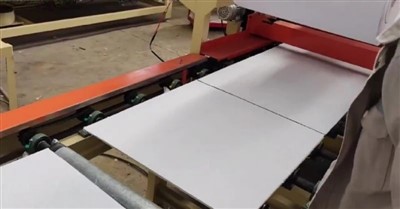
If you’re in the market for a PVC gypsum board production line, or you’re looking to upgrade your existing line to meet the latest safety certifications, I’m here to help. We’ve worked with factories across 20+ countries, and we can spec a line tailored to your target market, make sure it meets all the required safety certs upfront, and even help you navigate the audit process so you don’t hit any roadblocks. No jargon, no hidden fees, just straight talk on what you need. If you want to chat more about your specific project, hit me up and we can connect.
PVC Gypsum Board Production Line References
ISO 12100:2010, Safety of machinery — General principles for design — Risk assessment and risk reduction
EN 60204-1:2018, Safety of machinery — Electrical equipment of machines — Part 1: General requirements
ATEX 94/9/EC, Equipment and protective systems intended for use in potentially explosive atmospheres
NFPA 70: National Electrical Code
ISO 45001:2018, Occupational health and safety management systems — Requirements with guidance for use
CARB Phase 2, Airborne Toxic Control Measure for Formaldehyde Emissions from Composite Wood Products
REACH Regulation (EC) No 1907/2006, Registration, Evaluation, Authorization and Restriction of Chemicals
ASME B107.300-2015, Safety Requirements for Mechanical Power Transmission Apparatus
ISO 10300:2014, Rolling bearings — Torque requirements for bearings
Hebei Enjoy Technology Co., Ltd.
Hebei Enjoy Technology Co., Ltd. is one of the most professional manufacturers and suppliers of PVC gypsum board production line in China. With abundant experience, we warmly welcome you to buy high quality building material machinery made in China here from our factory. Contact us for more details.
Address: Jiuling Building, Xinhua District, Shijiazhuang City, Hebei Province, China
E-mail: Betty@seyibm.com
WebSite: https://www.enjoymachinery.com/
