If you’ve ever shopped for temporary or modular housing, you’ve probably heard people toss around terms like “expandable container house” as if they’re all the same. But after years of talking to everyone from remote site managers to small business owners who use our units for pop-up shops, I’ve learned that the thing most people actually care about isn’t just how big the place is—It’s the comfort level. Because a house, no matter how it’s built, is only useful if it feels like a space you can actually live, work, or relax in. That’s why today, I want to walk through what that comfort level actually means for an expandable container house, from the small, often overlooked details to the bigger, structural choices that make all the difference. Expandable Container House
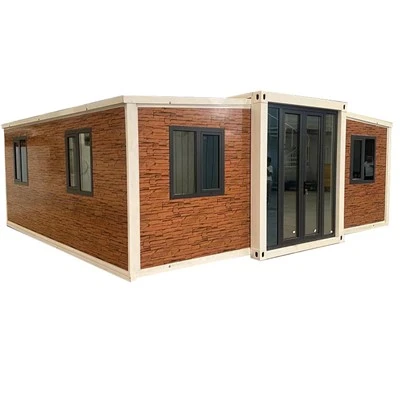
First, let’s start with the foundation people don’t always think about: how an expandable container house is constructed in the first place. Unlike traditional shipping containers that are modified post-construction, our expandable units are engineered to expand from a compact, transportable size to a larger, usable space—think 20 feet when closed, opening to 40 feet when fully extended, with a consistent, rigid frame that doesn’t sag or flex. That rigidity is non-negotiable for comfort, because if the frame warps, you’ll get drafty gaps around doors and windows, uneven floors, and even trouble with temperature control. A study on modular housing thermal performance from the National Association of Home Builders (NAHB) found that rigid, factory-built frames reduce air leakage by up to 30% compared to stick-built units assembled on-site. For expandable container houses, that rigidity comes from high-grade steel beams that are integrated into the expansion mechanism, not added as an afterthought. When the unit is closed, these beams lock into place just like a standard shipping container, so it’s durable enough to haul down a highway, and when it’s expanded, they create a solid internal structure that doesn’t creak or shift as you move around inside. That lack of movement is a big part of comfort—imagine sitting at your kitchen table and feeling a faint sway every time someone walks past; that’s not the quiet, stable space most people want.
Next, temperature control is probably the number one complaint I hear about modular housing, especially in extreme climates. Expandable container houses often get a bad rap for being hot in summer and cold in winter, and to be honest, that’s true if you cut corners on insulation. But here’s the thing: not all insulation is created equal, and most generic container modifications use thin, fiberglass batts that barely meet basic building codes. At our company, we take a different approach. We use closed-cell spray foam insulation, which not only fills every gap in the walls, floor, and ceiling but also acts as an air barrier. The Department of Energy (DOE) reports that closed-cell spray foam can reduce heating and cooling costs by up to 50% compared to fiberglass insulation, because it doesn’t allow air to leak through the walls. For an expandable unit, this is especially important because the expansion joints are the biggest potential weak point for air flow. We seal every joint with a high-performance, weather-resistant caulk that’s designed to expand and contract with the steel frame, so even on hot, humid days or cold, snowy nights, the inside temperature stays consistent. I’ve had clients in northern Canada tell us their expandable unit stays warm at 68 degrees Fahrenheit even when the outside temperature drops to 20 below, and clients in the Arizona desert say they rarely need to run the AC on mild days because the insulation keeps the cool air in. That kind of temperature stability isn’t a bonus—it’s a core part of comfort.
Then there’s indoor air quality, which is something that’s often overlooked but directly impacts how comfortable you feel day-to-day. A lot of cheap container modifications use materials that off-gas volatile organic compounds (VOCs) for months after installation—think particle board flooring, low-quality paint, and even the sealants used on expansion joints. Those VOCs can cause headaches, allergies, and a general stale feeling that makes a space feel uncomfortable, no matter how nice it looks. For our expandable houses, we use only low-VOC, eco-friendly materials throughout. The walls are lined with fire-rated, formaldehyde-free gypsum board, the flooring is rigid core luxury vinyl that’s free of phthalates, and all the sealants and paints we use meet the strictest EPA standards for indoor air quality. We also install a mini-split HVAC system that comes with a built-in air filter, so it circulates fresh air and removes dust, pollen, and other pollutants. Last year, we worked with a family that used our 2-bedroom expandable unit as a permanent home while their house was being built. They told us the biggest difference between our unit and a traditional modified container they’d looked at before was how fresh the air felt—no musty smell, no scratchy throat after being inside for a few hours. That small detail makes a huge difference in daily comfort that most people don’t even realize they’re missing until they experience it.
Let’s talk about space and layout too, because comfort isn’t just about temperature or air—it’s about how the space is designed to work for you. A lot of expandable container units just split the 40 feet of interior space down the middle, leaving you with two narrow rooms that feel cramped. But we design our units with flexible layouts that make the most of every square foot, without feeling cluttered. For example, our 40-foot expandable unit can be configured to have an open living area, a full kitchen, two bedrooms, a bathroom, and even a small laundry nook—all without feeling like you’re living in a box. We place windows strategically to let in natural light, which has been proven by a study from Cornell University to reduce feelings of anxiety and improve overall mood in indoor spaces. Instead of just adding a few small, high windows like traditional shipping containers, we install full-size, energy-efficient windows that run along the walls, so you get plenty of natural light without losing insulation. We also include ceiling fans and adjustable lighting, so you can adjust the space to feel cozy or bright, depending on what you’re doing. A construction site manager we work with uses our unit as an on-site office and break room. He told us that before, his old on-site trailer felt like a dark, stuffy closet, but with the open layout and big windows, his team actually prefers meeting in there for breaks instead of hanging around the dusty site. That kind of functional space is what makes an expandable container house feel like a home, not just a temporary structure.
Another big part of comfort is noise reduction. If you’ve ever stood near a busy road or construction site, you know how distracting constant noise can be, and that’s a big concern for people using expandable containers in urban areas or near industrial sites. The steel frame that makes expandable units so rigid can also make them more prone to echoing noise if you don’t treat the interior. To fix that, we add acoustic insulation to the interior walls and ceiling, along with fabric-wrapped acoustic panels in high-traffic areas like the living room and bedroom. The American Institute of Architects (AIA) notes that acoustic comfort is one of the top factors people rate when evaluating residential spaces, especially for sleep. We test all our units to ensure they meet or exceed the standard for outdoor noise reduction, so even if your unit is near a busy street or a busy worksite, you can have a quiet, restful space inside. I had a client in a downtown area who used our expandable unit as a small café. She told us that even though her shop was on a busy sidewalk, customers commented on how quiet the interior was—no street noise leaking in, so they could sit and work or eat without being distracted by traffic. That level of noise control is something you don’t get from a basic modified container.
Durability and maintenance also tie into comfort, because a space that’s always breaking down or needing repairs is never going to feel comfortable. Expandable container houses are designed to be portable, but they’re also built to last for decades, not just a few years. The steel frame is galvanized to resist rust, which is a huge issue for containers exposed to rain, snow, or salt air in coastal areas. We use stainless steel hardware for all the expansion mechanisms and hinges, so you don’t have to worry about them seizing up or breaking after a few seasons. The exterior is coated with a weather-resistant paint that’s designed to stand up to UV rays, so it won’t fade or peel in harsh sunlight. The interior materials are easy to clean and maintain—no fancy tile that cracks if you drop a dish, no carpet that stains and traps dust. For our clients, that means less time fixing things and more time enjoying their space. A family we worked with in Florida has had their 3-bedroom expandable unit for five years now, and they’ve only had to do minor maintenance—touching up a few spots of paint and lubricating the expansion hinges once a year. They told us that’s way less maintenance than their previous stick-built home, which needed a new roof and HVAC system after just 10 years. That peace of mind, knowing your space is durable and low-maintenance, is a key part of long-term comfort.
I know a lot of people still have misconceptions about expandable container houses—they think they’re cold, cramped, noisy, and only good for short-term use. But from my 15 years in this business, I’ve seen these units evolve into spaces that rival traditional homes in comfort, because we build them with real people’s needs in mind. Whether you’re using it as a permanent residence, a vacation home, an on-site office, a pop-up retail space, or a guest house, the comfort level depends on more than just the size of the space—it’s about the materials, the insulation, the design, and the attention to detail that goes into every unit. It’s about not cutting corners on the things that make a space feel like yours, even when it’s built to expand and move.
If you’re considering an expandable container house and want to learn more about how comfort works, or if you’re ready to talk through your specific needs—whether that’s a small unit for a vacation cabin or a larger multi-unit space for a business—we’re here to help. Our team can walk you through different layouts, insulation options, and custom features to make sure your space is exactly what you need, comfortable for years to come.
Capsule House References
National Association of Home Builders. (2022). Thermal Performance in Modular Housing.
U.S. Department of Energy. (2023). Closed-Cell Spray Foam Insulation Benefits.
Cornell University College of Agriculture and Life Sciences. (2021). Natural Light and Indoor Well-Being.
American Institute of Architects. (2020). Key Factors for Residential Comfort Design.
Jiangsu Suqian Longze Modular Construction Co., Ltd.
As one of the most professional expandable container house manufacturers and suppliers in China, our products have good reputation in the market. Please feel free to buy high quality expandable container house at competitive price from our factory. We also accept customized orders.
Address: No. 8, Weisan Road, Shuanggou Town, Sihong County, Suqian City, Jiangsu Province, China
E-mail: Lzmk88888888@163.com
WebSite: https://www.expandablehousefactory.com/
