If you’ve ever worked with liquid silicone rubber (LSR) or high-consistency rubber (HCR) parts—think medical implants, waterproof phone gaskets, or automotive seal gaskets—you’ve probably heard the phrase “injection time control” thrown around a lot. But if you’re new to vertical silicone injection machines, it’s not just a vague industry buzzword: it’s the single most critical variable that separates a perfect, consistent part from a scrap-heap reject. As a vertical silicone injection machine supplier who’s spent the last 12 years troubleshooting, training, and refining equipment for companies across medical, automotive, and consumer goods, I’ve seen firsthand how mismanaged injection time can tank production runs before you even hit full capacity. Let’s break this down simply, no overly technical jargon, straight from the shop floor to your control panel. Vertical Silicone Injection Machine
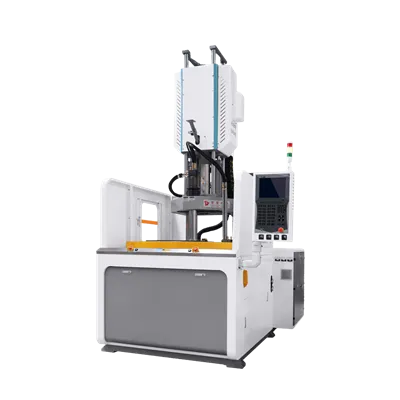
First, let’s get clear on what injection time actually is, specifically for vertical silicone machines, because this is where it differs from horizontal injection molding that most people are familiar with. Horizontal machines inject material horizontally into a mold clamped at the back of the machine, but vertical machines have the mold oriented vertically, usually with the injection unit sitting directly above the mold cavity. That setup is great for parts with inserts—like a medical valve core that needs a stainless steel pin embedded mid-mold—but it changes how material flows, and therefore how injection time is calculated.
In short, injection time is the total window from when the screw on your vertical machine starts pushing silicone into the closed, clamped mold, to the exact moment the screw stops and switches to hold pressure. It’s not just how fast you push material; it’s the timing calibrated to match the specific silicone grade, part size, mold design, and cooling setup. If you get this wrong, even a well-tuned machine will produce parts with air bubbles, incomplete fills, uneven curing, or flash (thin, unwanted silicone excess around part edges) that requires manual trimming.
Let’s start with why vertical silicone machines have unique injection time requirements that aren’t the same as horizontal units. For one thing, vertical molds are often taller or more vertically oriented, so silicone has to travel up, down, or around inserts in a straight line instead of horizontally. This creates higher backpressure in the mold cavity, which means if you inject too fast, you’ll shear the silicone too much—LSR, for example, cures as it’s sheared, so over-rapid injection can trigger premature curing mid-flow, leaving a lumpy, incomplete part. On the flip side, injecting too slow means the silicone cools or starts curing before it reaches the farthest point of the mold, resulting in short shots (parts with missing sections) that are useless.
I remember a client I worked with last year: a small medical device startup making insulin pump gaskets. They’d been using a cheap horizontal machine they’d bought used, and their production yield was barely 72%—that means 1 out of every 3 parts was scrap, costing them thousands in wasted silicone and labor. When we switched them to a custom vertical silicone machine and recalibrated their injection time, their yield jumped to 95% on their first full run. The issue? Their old horizontal machine was calibrated for a flat, horizontal mold, so when they moved to a vertical setup for better insert alignment, they were injecting silicone 2x faster than they needed to, leading to shearing and micro-bubbles that made the gaskets fail FDA biocompatibility tests. That’s not a small win—for a medical part, yield and consistency are non-negotiable.
Now, let’s get into how injection time is controlled on a modern vertical silicone injection machine, because this is where the technology has come a long way from the manual dials of 20 years ago. Most of our mid-range and premium vertical machines use two core control systems for injection time: screw position control and cavity pressure sensing.
Screw position control is the baseline. The machine’s PLC (programmable logic controller) is calibrated to track how much silicone is left in the barrel, so when the screw moves forward to inject, it stops exactly at the pre-set position that corresponds to filling the full mold cavity volume. For simple parts, this is enough, but for complex parts with thin walls or inserts, cavity pressure control is non-negotiable. We mount small pressure sensors inside the mold cavities of our vertical machines, and these sensors send real-time data back to the control panel. The machine automatically adjusts injection time to hit a pre-set pressure threshold—so if a section of the mold is narrower (like a thin gasket edge), the machine slows the injection slightly to prevent pressure spikes, or speeds up a bit for wide, open sections. That’s a huge step up from manual control, which relies on an operator guessing and tweaking settings mid-run, leading to inconsistency between the first part of the shift and the last.
A common mistake I see new operators make is thinking “fast injection = faster production” and cranking the injection speed up to cut cycle time. But here’s the thing: injection time isn’t just a speed number—it’s a balance between fill speed, material behavior, and cooling time. For example, LSR (a two-part liquid silicone that cures via platinum catalyst) has a cure time that’s tied to how quickly it flows. If you inject LSR in 1 second instead of the recommended 2.5 seconds, the material shears as it moves through the nozzle and gate, which activates the platinum catalyst early. That means the silicone starts curing before it’s fully filled, so you get a part that’s solid in the center but not fully formed on the edges. For HCR (high-consistency rubber, a more solid silicone used for heavy-duty parts like engine mounts), the same rule applies: too fast, and you get internal voids; too slow, and the material starts to cool and harden before filling.
Another factor specific to vertical machines is gravity. Because the mold is oriented vertically, gravity is working with or against the flow of silicone, which changes injection time needs. If you’re filling a mold where silicone flows downward, gravity helps pull the material, so you can inject slightly slower to avoid pressure spikes. If you’re filling a mold where silicone has to flow upward against gravity, you need a slightly faster injection time to get the material to the top of the cavity before it starts to cure. We always include gravity compensation in our machine control software—something many budget vertical machine suppliers skip, which is why cheap machines often struggle with consistently filled tall or vertical parts.
Let’s talk about how to dial in injection time correctly, step by step, because that’s what operators actually need to know, not just theory. First, start with the mold design and silicone grade. We always provide a material compatibility guide with our vertical silicone machines that lists recommended injection times for common LSR and HCR grades. For example, 50 Shore A LSR (a medium-firmness silicone used for gaskets) has a recommended fill time of 1.5 to 3 seconds, while 70 Shore A HCR (used for automotive seals) is 2 to 4 seconds. That baseline is non-negotiable—changing silicone grades means changing injection time, even on the same mold.
Next, do a test run with 10-15 short shots. A short shot is when you fill 80-90% of the mold cavity instead of 100%, which lets you see how the material flows without wasting full parts. Watch for flow lines, air pockets, or un-filled sections. If the flow is smooth and even all the way to the edge, your injection time is on track. If there are gaps at the top of a vertical mold, you need a slightly faster injection time to beat gravity. If there are bubbles or flash, you’re injecting too fast and need to slow down.
Then, use the machine’s cavity pressure data to refine. Most modern vertical silicone machines will show a pressure curve on the control panel during injection. The ideal curve is a steady, linear rise to your target pressure, with no sharp spikes or dips. A sharp spike means you’re going too fast and hitting a bottleneck in the mold, while a dip means the material slowed down mid-flow because it was curing too early. Adjust injection time by 0.2-0.5 seconds at a time between test runs—small tweaks make a huge difference here.
I can’t stress enough how consistent injection time is for part quality. I once had a client who was producing 5000 silicone keypads a day for remote controls. They were running their vertical machine 24/7, and their operator was manually adjusting injection time every few hours because the machine didn’t have automated cavity pressure control. After we upgraded their machine to have real-time injection time adjustment via pressure sensors, their part rejection rate dropped from 12% to 2%—saving them over $40,000 a year in wasted material and labor. That’s not an exaggeration; that’s the kind of ROI we see every day when we get injection time control right.
Now, what about common issues that mess up injection time, even on well-maintained vertical machines? The number one issue is worn machine components. The screw and nozzle on a vertical silicone machine are made to handle silicone, which is slightly abrasive, so over time, small gaps can form between the screw and barrel. This leads to inconsistent material flow, which makes injection time unpredictable. We recommend replacing screws and nozzles every 2-3 years for high-volume runs, and having regular maintenance checks every 6 months to clean the check valve (a small part that controls material flow into the mold) and calibrate the control panel’s time sensors.
Another common issue is mold temperature. Silicone cures faster at higher mold temperatures, so if your mold is running a little hotter than set, you need to adjust injection time to be slightly slower to avoid premature curing. We always work with our clients to integrate mold temperature control into the vertical machine’s control system, so injection time is automatically adjusted based on real-time mold temperature data—another feature that separates budget machines from professional-grade ones.
At the end of the day, injection time control on a vertical silicone injection machine isn’t just a setting—it’s the foundation of consistent, high-quality silicone parts. Whether you’re making medical devices, automotive components, or consumer goods, getting this right cuts waste, speeds up production, and ensures your parts meet all your regulatory and quality standards.

If you’re currently struggling with inconsistent silicone parts, high scrap rates, or wondering if your vertical injection machine’s injection time is optimized for your application, we can help. Our team of engineers has over 20 years of experience designing and calibrating vertical silicone injection machines for every industry, from small startups to large multinational manufacturers. We offer custom calibration, operator training, and maintenance plans to make sure your machine is running at peak efficiency, with injection time tuned exactly for your materials and molds. We’re ready to work with you to find the right solution for your production needs.
Two Shot Vertical Injection Moulding Machine References
- Rosato, D. V., & Rosato, M. G. (2004). Injection Molding Handbook (5th ed.). Kluwer Academic Publishers.
- Stephenson, H. (2018). Liquid Silicone Rubber Molding: Process Control and Quality Assurance. Society of Plastics Engineers.
- International Organization for Standardization. (2021). ISO 10993-5: Biological Evaluation of Medical Devices – Part 5: Tests for In Vitro Cytotoxicity. ISO.
Guangdong Baizan Intelligent Equipment Co., Ltd.
We are one of the most professional vertical silicone injection machine manufacturers and suppliers in China. We warmly welcome you to buy customized vertical silicone injection machine at competitive price from our factory. If you have any enquiry about pricelist and quotation, please feel free to email us.
Address: No.8, Jianye Road, Dahuai Town, Enping City, Jiangmen City, Guangdong
E-mail: wjx@baizanjx.com
WebSite: https://www.baizanplast.com/
