If you’ve ever worked in fields like particle physics, medical imaging, semiconductor manufacturing, or even advanced environmental monitoring, you know that off-the-shelf detector modules rarely fit every unique requirement. As someone who’s spent the last 12 years as a detector module supplier—walking the floor with engineers, troubleshooting custom builds, and seeing projects derailed by one-size-fits-all hardware—I’m here to tell you: yes, detector modules can absolutely be customized. And far from being a niche luxury, custom detector modules are often the only way to solve some of the most pressing, high-stakes challenges in modern science and industry. Detector Module
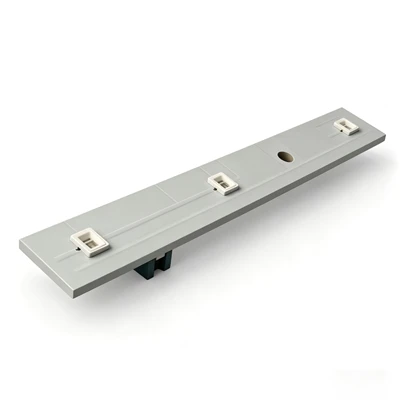
Let me start with what a detector module actually is, for anyone new to the space. At its core, a detector module is a self-contained unit that detects radiation, particles, or light and converts that input into a measurable electrical signal. Most off-the-shelf models are built to cover general use cases: a gamma detector for routine lab safety checks, a silicon detector for basic physics experiments. But when you’re dealing with a medical device that needs to image rare isotopes at ultra-high resolution, or a semiconductor fab that needs to detect subatomic particles to monitor defect sizes, or a space telescope that has to operate at cryogenic temperatures for years on end, those off-the-shelf units fall short. That’s where customization comes in—and it’s not a process reserved for big-name national labs. I’ve worked with small startup teams, academic research groups, and global industrial leaders on custom builds, and the process is far more accessible and transparent than many people assume.
Let’s break down why someone would reach for a custom detector module, and what that customization actually entails. First, there’s the matter of performance. Off-the-shelf modules are calibrated for average conditions, but unique environments demand unique specs. For example, last year I worked with a team at a university’s medical physics department developing a next-gen positron emission tomography (PET) scanner for brain imaging. Their challenge was that standard PET detectors have a timing resolution of around 500 picoseconds, which blurs images when imaging small, rapidly moving structures in the brain. Their solution? A custom silicon photomultiplier (SiPM) module with a timing resolution of 120 picoseconds, paired with a custom scintillator crystal geometry that matched their scanner’s compact bore size. We didn’t just swap a part—we redesigned the module’s internal signal processing circuit to reduce noise, calibrated every unit to their specific isotope (fluorine-18, in this case) to eliminate cross-talk, and even adjusted the module’s housing to fit the scanner’s tight space constraints. That’s not a trivial tweak; that’s building a module from the base components up to meet their exact operational needs.
Then there are environmental constraints that off-the-shelf modules can’t handle. Aerospace, for instance, is a big one. A detector module for a satellite’s cosmic ray experiment can’t just work in a lab at 20 degrees Celsius and 1 atmosphere of pressure. It needs to survive launch vibrations, operate at temperatures ranging from -150°C in deep space to 50°C when the satellite passes in sunlight, and withstand years of radiation exposure from solar particles. A few years back, we worked with a space physics team designing a detector to measure solar wind protons. Their off-the-shelf detector modules were failing the radiation hardness tests at NASA’s Goddard Space Flight Center—they would degrade by 20% after just 6 months in simulated space radiation. So we customized the module: we selected a rad-hard silicon sensor instead of a commercial-grade one, redesigned the module’s power supply to operate efficiently at low temperatures, and added a thin layer of radiation shielding that didn’t add unnecessary weight (a critical factor for launch costs). The result? A module that passed all space agency tests, and is now flying on a CubeSat that’s been operational for 3 years with no signal degradation.
Cost is another common reason companies and research groups opt for customization, though it’s often misunderstood. I hear people say, “Custom is too expensive,” and that’s true if you need a single custom module. But when you need 50, 100, or even 1,000 modules for a production line or a large-scale experiment, customization can actually save money in the long run. Let’s take semiconductor manufacturing, for example. A major chipmaker came to us a few years ago, frustrated that their off-the-shelf particle detectors were generating too many false positives, which forced them to shut down production lines 20 times a month to clean and calibrate. The false positives were due to the modules’ inability to distinguish between background noise and the rare alpha particles that cause chip defects. We customized the module’s pulse-height discrimination algorithm and adjusted its sensor size to target the exact energy of the alpha particles the company was detecting. The initial order was 200 modules, and while the per-unit cost was 15% higher than off-the-shelf, the company saw a 40% reduction in production line downtime within 6 months. That meant millions of dollars in saved output annually, far outweighing the up-front custom cost.
Now, I want to demystify the customization process, because a lot of people think it’s a black box: send a vague request, get a quote 6 weeks later, and a module that’s not quite what you needed. In my 12 years in this business, we’ve refined the process to be collaborative, transparent, and iterative. It starts with a needs assessment, not a spec sheet. When a potential client approaches us, we don’t just ask “what type of detector do you need?” We ask questions that get to the heart of their use case: What environment will this module operate in? What’s the signal you need to detect, and at what rate? Are there size, weight, or power (SWaP) constraints? What’s your tolerance for noise or signal lag? Do you need the module to integrate with existing data systems, or will you need us to design the readout software too?
Take a recent example: a startup developing a portable radiation monitor for first responders. The team’s initial request was for a standard gamma detector module. But during our needs assessment, we learned they needed the module to detect low-energy gamma rays (common in nuclear waste that first responders might encounter), fit in a firefighter’s gear pocket, run for 8 hours on a standard AA battery, and work in temperatures down to -20°C. An off-the-shelf module was too big, used too much power, and wasn’t sensitive enough to low-energy gammas. So we customized a silicon-based detector module with a thin, sensitive window to capture low-energy photons, optimized the power circuit to cut current usage by 35% without losing sensitivity, and designed a compact housing that fit their pocket-sized device. We provided a prototype in 6 weeks, they tested it, made one small adjustment to the signal threshold for their specific use case, and we delivered the full order in 10 weeks. No hidden fees, no vague timelines—just a process that’s built on listening to what the client actually needs, not just selling a pre-made product.
Of course, customization does have limitations, and it’s important to be realistic about what’s possible. Not every tweak is worth the cost, and there are times when an off-the-shelf module is the better choice. For example, if a research team needs 10 identical gamma detectors for a routine lab experiment where environment and performance aren’t extreme, an off-the-shelf module will be cheaper, faster, and fully adequate. The key is knowing when customization is the right call: when you have unique performance, environmental, size, or cost constraints that off-the-shelf can’t meet.
Another common question I get: is customization only for large orders or big projects? Absolutely not. We’ve worked with small academic labs that needed just 5 custom modules for a small physics experiment, and we’ve delivered customized modules for individual researchers working on prototype medical devices. That’s one thing I love about this industry: we don’t just cater to big corporations or national labs. If you have a solid use case and a clear set of needs, we can work with you to build a custom detector module that fits your project.
I also want to address a common misconception that custom detector modules are less reliable than off-the-shelf. When built correctly, custom modules can actually be more reliable because they’re tailored to your exact needs—there are no extra parts or features you don’t need that can fail, and every component is selected for your specific operating conditions. That’s not to say customization eliminates all risk; prototyping and testing are critical steps in the process. We test every custom module in our in-house environmental chamber, which simulates temperature extremes, vibration, and radiation, and we run signal integrity tests to ensure the module performs as expected before it ships to the client.
Looking ahead, the demand for custom detector modules is only going to grow. As fields like quantum computing, climate science, and advanced medical imaging push the boundaries of what’s possible, off-the-shelf technology will continue to fall short. At the end of the day, a detector module is a tool— and the best tool for your job is the one built to do exactly what you need, no compromises.
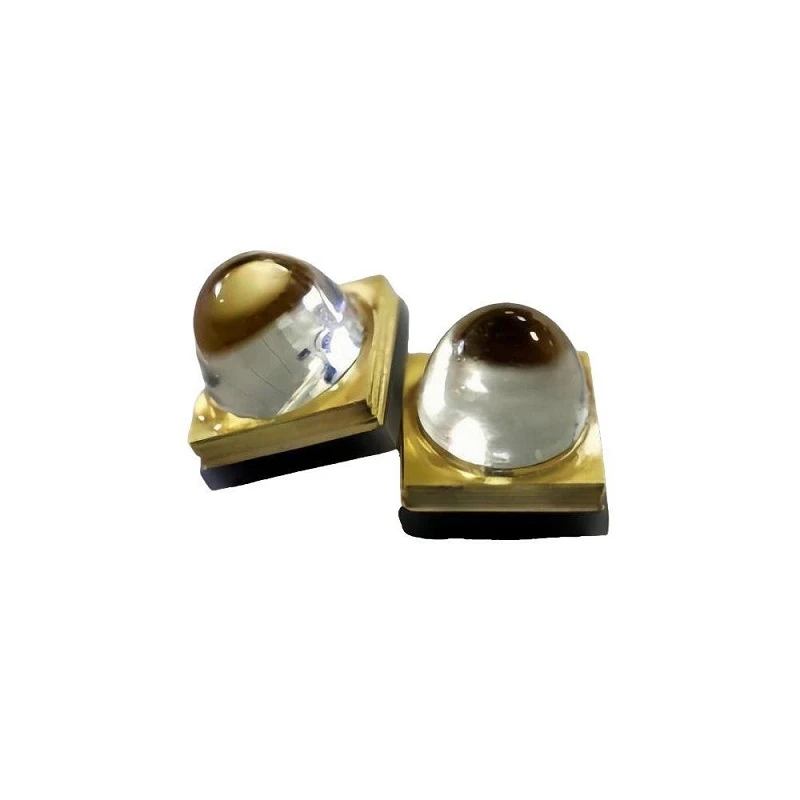
If you’re working on a project where off-the-shelf detector modules just aren’t cutting it, don’t settle. Whether you’re developing a new medical device, a satellite instrument, a semiconductor quality control system, or any other application that requires precision and tailored performance, a custom detector module is likely the solution you need. Reach out to discuss your requirements, and let’s build a module that fits your project, not the other way around.
Detector Module References
Leo, W. R. (1994). Techniques for Nuclear and Particle Physics Experiments: A How-To Approach. Springer-Verlag.
Knoll, G. F. (2010). Radiation Detection and Measurement (4th ed.). John Wiley & Sons.
Shultis, J. K., & Faw, R. E. (2000). Radiation Shielding. American Nuclear Society.
UVLEDTEK Group
As one of the most professional detector module manufacturers and suppliers in China, our products have good reputation in the market. Please rest assured to buy high quality detector module at competitive price from our factory. For more information, contact us now.
Address: Huangshi Industrial Zone, Putian City, Fujian Province, China
E-mail: info@uvledtek.com
WebSite: https://www.uvledtek.com/
